v

Chinese Livestock and Poultry Breeding ›› 2026, Vol. 22 ›› Issue (5): 116-124.doi: 10.19543/j.cnki.1673-4556.20260428.004cstr: 32418.14.j.cnki.1673-4556.20260428.004

Special Issue: Protection and utilization of livestock and poultry germplasm resources; Protection and utilization of chicken germplasm resources

• Protection and Utilization of Animal Germplasm Resources • Previous Articles     Next Articles

Current status of hybridization and breed conservation recommendations for Turpan fighting cocks

Qingzheng Wang1,2(), Na Yang1,2, Huie Wang1, Ruihua Dang1, Yinamujiang·Yalimaimaiti3, Mubareke·Muhaimaite4, Aierken·Alimu5, Tuerdibake·Tuerxuntuoheti6, Tianxin Zhao1,2, Nurikayahan·Aili1,2, Gemingguli·Muhatai1,2()   

  1. 1. College of Animal Science and Technology, Tarim University, Aral, 843300, Xinjiang
    2. Key Laboratory of Biological Resources Conservation and Utilization in the Tarim Basin, Aral, 843300, Xinjiang
    3. Livestock and Veterinary Station, Karayagachi Township, Yining County, Xinjiang 835100
    4. Agriculture and Rural Affairs Bureau, Jimusar County, Changji, 831700, Xinjiang
    5. Livestock and Veterinary Station, Awati Town, Kashgar 843200, Xinjiang
    6. Livestock and Veterinary Station, Zawa Town, Hotan, 848100, Xinjiang
  • Received:2026-01-09 Online:2026-03-26 Published:2026-06-17
  • Contact: Gemingguli·Muhatai E-mail:1324801900@qq.com;gmgl-113@foxmail.com

Abstract:

Turpan fighting cock, as a unique local livestock genetic resource in Xinjiang, have strong fighting spirit, good environmental adaptability, and unique cultural value. This paper, through a 2022 field survey of fighting chicken populations in Turpan, Aksu, Kashgar, Hotan, and Ili in Xinjiang, analyzes the hybrid status and phenotypic differentiation of Turpan fighting cocks based on phenotypic data such as body appearance and body measurements from each region, combined with historical literature and breed standards. The investigation found significant phenotypic differentiation among chickens from different production areas, a sharp decline in population numbers, inconsistent breed standards for Turpan fighting cocks, a lack of regular genetic monitoring, and insufficient scientific guidance for farmers. In response to these issues, the paper proposes strategies such as refining phenotypic classification standards, improve the population structure and genetic monitoring systems, and integrating cultural heritage with industry development, aiming to provide theoretical support and practical reference for the effective protection and precise management of Turpan fighting chicken genetic resources.

Key words: Turpan fighting cock, Phenotypic differentiation, Breed standards, Purebred preservation, Germplasm resources

CLC Number: 

  • S831

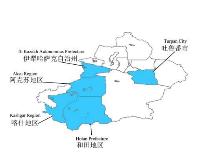
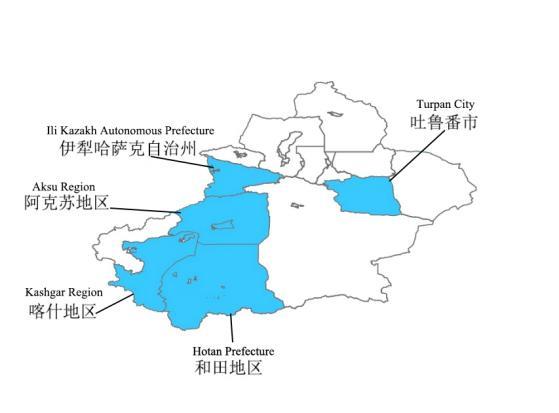
Fig. 1

Distribution areas of local fighting cocks in Xinjiang"

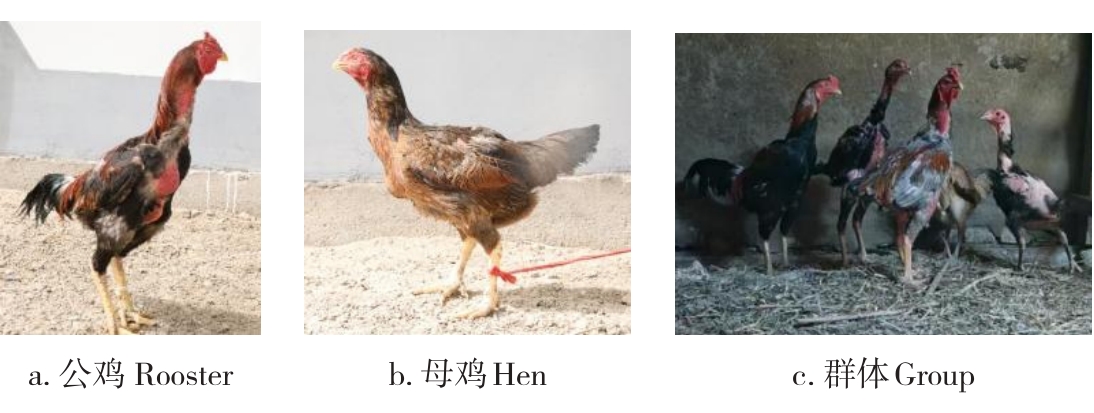
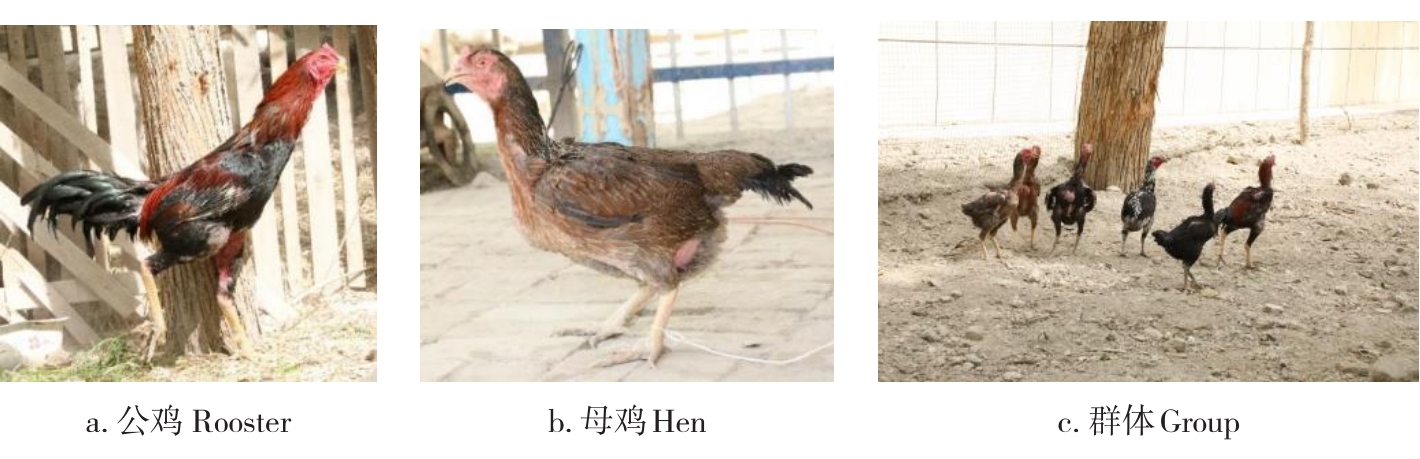
Fig. 2

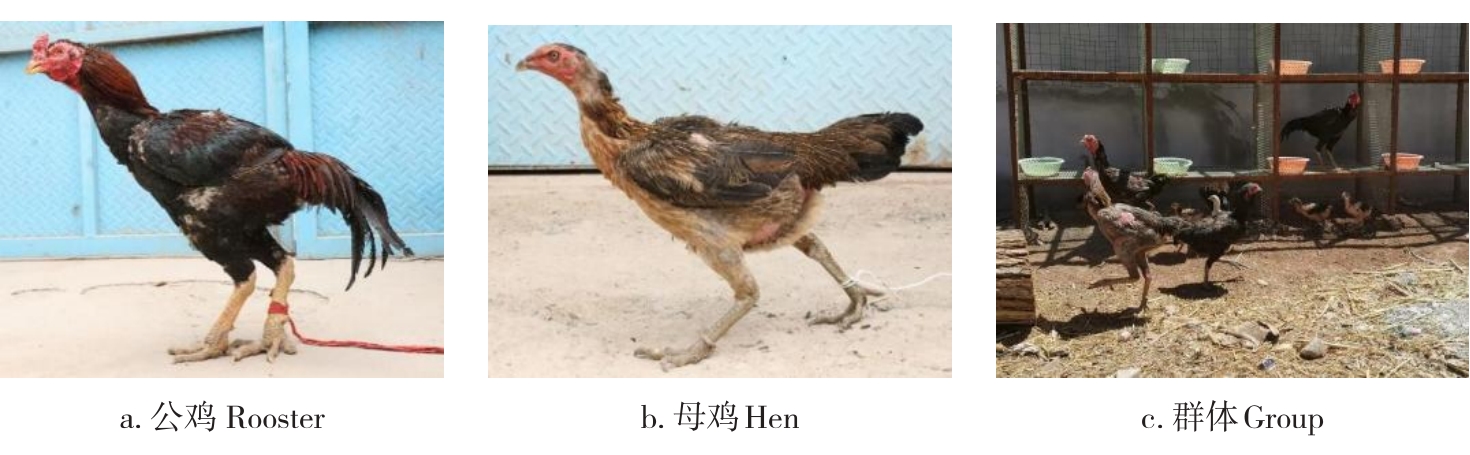
Turpan fighting cocks Note: Images were taken during phenotypic data collection. The same applies to the photo below."

Fig. 3

Local Turpan fighting cocks in the Aksu region"

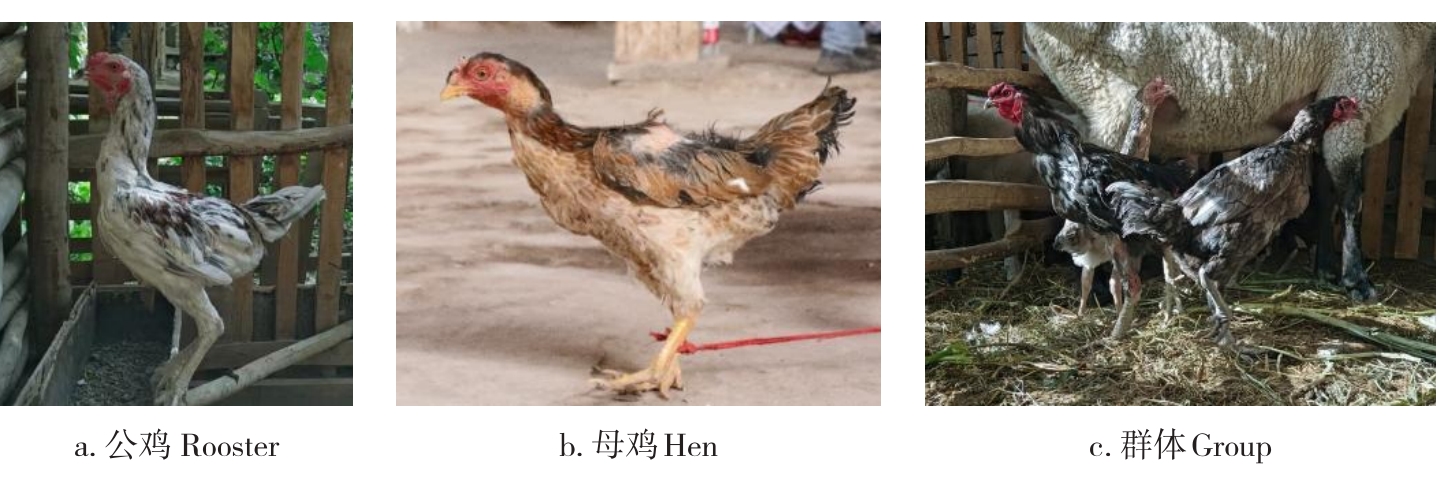
Fig. 4

Local Turpan fighting cocks in the Hotan area"

Fig. 5

Local Turpan fighting cocks in Kashgar region"

Table 1

Comb type, beak type, bare neck, and high legged diversity of Turpan fighting cocks in different regions of Xinjiang"

地区Region 冠型 Comb types/% 喙型 Beak shapes/% 裸颈Bare neck/% 高脚High legged/%
豆冠 玫瑰冠 平喙 带钩喙
吐鲁番 Turpan 81.58 18.42 7.89 92.11 1.75 45.61
阿克苏 Aksu 80.00 20.00 30.91 69.09 9.09 99.09
和田 Hotan 100.00 - 12.24 87.76 100.00 57.14
喀什 Kashi 80.72 19.28 15.06 84.94 28.31 87.95
伊犁Ili 82.35 17.65 11.87 88.13 18.77 89.23

Table 2

Comparison of feather colors of different parts of Turpan fighting cockss in various regions of Xinjiang"

地区 Region 部位 Body Part 浅麻Light hemp 深麻Deep hemp 黑Black 棕Brown 灰Gray 红Red 黄Yellow 白White
吐鲁番 Turpan 颈羽 Neck feather 2 28 56 - - 14 - -
背羽 Back feather - 46 45 - - 9 - -
鞍羽 Saddle feathers - 47 44 - - 9 - -
胸羽 Chest feathers 3 - 53 8 36 - - -
腹羽 Belly feathers 3 - 53 9 36 - - -
翼羽 Wing feather - 38 44 17 1 - - -
尾羽 Tail feathers - 27 73 - - - - -
阿克苏 Aksu 颈羽 Neck feather - 61 - 4 2 33 - -
背羽 Back feather - 98 2 - - - - -
鞍羽 Saddle feathers - 48 3 - - 49 - -
胸羽 Chest feathers 28 18 50 4 - - - -
腹羽 Belly feathers 2 25 52 3 - - 18 -
翼羽 Wing feather 2 96 2 - - - - -
尾羽 Tail feathers - 46 53 - - - - 1
和田 Hotan 颈羽 Neck feather 55 15 - 17 13 - - -
背羽 Back feather 54 27 - - 19 - - -
鞍羽 Saddle feathers 53 26 12 - - 9 - -
胸羽 Chest feathers 77 - - 23 - - - -
腹羽 Belly feathers 80 - - 20 - - - -
翼羽 Wing feather 53 27 18 - 2 - - -
尾羽 Tail feathers 37 2 36 - 25 - - -
喀什 Kashi 颈羽 Neck feather 5 44 1 8 - 42 - -
背羽 Back feather - 67 27 - - 6 - -
鞍羽 Saddle feathers - 64 2 - - 34 - -
胸羽 Chest feathers 32 4 53 4 - - 7 -
腹羽 Belly feathers 10 35 44 4 - - 7 -
翼羽 Wing feather - 55 41 - 4 - - -
尾羽 Tail feathers - 53 44 - 3 - - -
伊犁 Ili 颈羽 Neck feather - 15 11 42 - 32 - -
背羽 Back feather - 43 52 - - 5 - -
鞍羽 Saddle feathers - 30 18 - - 52 - -
胸羽 Chest feathers 6 5 51 - 38 - - -
腹羽 Belly feathers 5 38 48 - 9 - - -
翼羽 Wing feather - 53 37 6 4 - - -
尾羽 Tail feathers - 53 42 - 5 - - -

Table 3

Comparison of the tibia color of Turpan fighting cocks in different regions of Xinjiang"

地区

Region

胫色 Shank color/%
吐鲁番Turpan 33 - 28 3 36
阿克苏Aksu 38 1 - 45 16
和田Hotan 28 56 - - 16
喀什Kashi 86 10 - - 4
伊犁Ili 42 - 21 - 37

Table 4

Body weight and body measurements of male and female turpan fighting cocks"

地区Region 性别Sex 体重Body weight/g 体斜长Body length/cm 龙骨长Keel length/cm 胸宽Chest width/cm 胸深Chest depth/cm 胸角Pectoral angle/° 髋骨宽Hip width/cm 胫长Tibia length/cm 胫围Shank circumference/cm
吐鲁番Turpan 3525.25±367.48 24.25±1.26 15.35±1.36 11.28±1.02 14.28±0.75 93.28±12.53 7.35±0.85 12.5±0.8 6.78±0.75
2814.29±264.77 23.11±0.72 11.98±1.62 9.95±0.87 12.54±0.48 90.58±11.37 7.01±0.65 10.23±0.68 5.34±0.8
阿克苏Aksu 3051.28±244.95 26.48±1.16 14.43±1.12 10.83±0.99 13.98±0.29 94.06±9.80 7.88±0.65 11.98±0.82 6.24±0.82
2455.18±141.42 24.13±0.63 11.90±1.84 9.24±0.94 12.75±0.50 89.85±8.2 7.65±0.46 10.83±0.55 5.15±0.71
喀什Kashi 3514.72±132.29 25.36±1.03 15.64±1.15 10.75±1.13 13.86±0.43 93.88±9.09 7.39±0.52 12.39±1.02 6.51±0.77
2533.33±290.59 23.58±0.49 11.72±1.75 9.81±0.51 12.07±0.84 90.93±11.74 7.02±0.71 10.95±0.62 4.93±0.77
和田Hotan 3316.67±208.17 24.64±0.22 15.04±1.18 11.34±0.77 14.48±0.81 93.16±11.54 7.84±0.94 13.04±0.93 5.29±0.79
2408.75±181.34 23.44±1.35 12.09±1.53 10.23±0.54 12.58±0.58 90.97±10.37 7.24±0.62 11.19±0.61 4.83±0.52
伊犁Ili 3379.71±702.07 28.46±2.1 14.72±1.02 10.64±1.04 14.08±0.81 90.08±7.6 7.85±0.73 13.01±0.73 5.73±0.53
2472.71±540.52 24.66±2.01 13.26±1.5 9.23±1.03 12.6±1.04 85.86±8.73 7.13±0.52 10.88±0.74 4.69±0.37
[1]
李慧芳, 陈宽维, 章双杰, 等. 中国受威胁地方鸡品种的遗传多样性[J]. 南京农业大学学报, 2005, 28(3): 68-70.
LI H F, CHEN K W, ZHANG S J, et al. Genetic diversity of indigenous threatened chicken breeds in China[J]. Journal of Nanjing Agricultural University, 2005, 28(3): 68-70.
[2]
杨凯. 新疆三种地方鸡遗传关系及拜城油鸡的基因组选择信号研究[D]. 南京: 南京农业大学, 2022.
YANG K. Study on the Genetic Relationships of Three Local Chicken Breeds in Xinjiang and the Genomic Selection Signals of Baicheng You Chicken[D]. Nanjing: Nanjing Agricultural University, 2022.
[3]
薛正芬, 郭立, 张文举, 等. 吐鲁番斗鸡肉用性能研究[J]. 新疆畜牧业, 2016, 32(1): 34-35.
XUE Z F, GUO L, ZHANG W J, et al. Study on the functional performance of Douji chicken meat in Turpan[J]. Xinjiang Animal Husbandry, 2016, 32(1): 34-35.
[4]
吐鲁番市地方志编纂委员会. 吐鲁番市志[M]. 乌鲁木齐: 新疆人民出版社, 2005.
Turpan City Local Chronicles Compilation Committee. Chronicle of Turpan City[M]. Urumqi: Xinjiang People's Publishing House, 2005.
[5]
新疆畜牧业调查编写组. 新疆畜牧业调查[M]. 乌鲁木齐: 新疆人民出版社, 1965.
Xinjiang Animal Husbandry Survey Compilation Group. Xinjiang Animal Husbandry Survey[M]. Urumqi: Xinjiang People's Publishing House, 1965.
[6]
《中国家禽品种志》编写组. 中国家禽品种志[M]. 上海: 上海科学技术出版社, 1989.
Editorial Board of Chinese Domestic Fowl Breeds. Chinese Domestic Fowl Breeds[M]. Shanghai: Shanghai Scientific & Technical Publishers, 1989.
[7]
新疆维吾尔自治区质量技术监督局. 吐鲁番斗鸡: DB65/T 3846—2016 [S].
Xinjiang Uygur Autonomous Region Bureau of Quality and Technical Supervision. Turpan Cockfight: DB65/T 3846—2016 [S]
[8]
蒲晓华. 中国斗鸡遗传多样性及全基因组选择信号研究[D]. 泰安: 山东农业大学, 2022.
PU X H. Genetic Diversity and Selection Signatures in Chinese Native Game Chickens Based on Whole Genome Sequencing[D]. Taian: Shandong Agricultural University, 2022.
[9]
杨娜. 南疆3个地方鸡群遗传多样性及群体结构研究[D]. 阿拉尔: 塔里木大学, 2024.
YANG N. Genetic diversity and population structure of three local chicken populations in southern[D]. Alaer: Tarim University, 2024.
[10]
薛正芬, 阿扎提, 王建勋, 等. 吐鲁番斗鸡体重和体尺性状的相关性分析[J]. 黑龙江畜牧兽医, 2018(2): 193-195.
XUE Z F, A Z T, WANG J X, et al. Correlation analysis between body weight and body size of Turpan cockfighting[J]. Heilongjiang Animal Science and Veterinary Medicine, 2018(2): 193-195.
[11]
REN X F, GUAN Z, LI H Y, et al. Extensive intra- and inter-genetic admixture of Chinese gamecock and other indigenous chicken breeds revealed by genomic data[J]. Poultry Science, 2023, 102(7): 102766.
[12]
REN X F, GUAN Z, ZHAO X R, et al. Systematic selection signature analysis of Chinese gamecocks based on genomic and transcriptomic data[J]. International Journal of Molecular Sciences, 2023, 24(6): 5868.
[13]
邱金玲, 邢红文. 浅谈吐鲁番斗鸡的选种与选配[J]. 中国畜禽种业, 2015, 11(11): 132-133.
QIU J L, XING H W. Selection and selection of cockfighting in Turpan[J]. The Chinese Livestock and Poultry Breeding, 2015, 11(11): 132-133.
[14]
符安, 顾丽红, 陈益勇, 等. 文昌鸡概况及全产业链分析[J]. 中国畜禽种业, 2022, 18(12): 30-33.
FU A, GU L H, CHEN Y Y, et al. General situation of Wenchang chicken and analysis of its whole industrial chain[J]. The Chinese Livestock and Poultry Breeding, 2022, 18(12): 30-33.
[15]
孟晨西, 王磊, 刘军. 喀什市斗鸡活动现状调查及文化传承研究[J]. 新疆师范大学学报(哲学社会科学版), 2022, 43(3): 112-120.
MENG C X, WANG L, LIU J. Investigation on the Current Situation and Cultural Inheritance of Cockfighting in Kashgar City[J]. Journal of Xinjiang Normal University (Philosophy and Social Sciences Edition), 2022, 43(3): 112-120.
[16]
XU N Y, ZHANG L Y, CHEN F F, et al. Population structure, selection signal and introgression of gamecocks revealed by whole genome sequencing[J]. Journal of Animal Science and Biotechnology, 2025, 16(1): 22.
[17]
张兆, 李建疆. 中西方斗鸡文化分析[J]. 体育文化导刊, 2014(9): 68-71.
ZHANG Z, LI J J. Analysis of cockfighting culture in China and the west[J]. Sports Culture Guide, 2014(9): 68-71.
[18]
薛正芬, 拉扎特·艾尼瓦尔, 阿扎提, 等. 吐鲁番斗鸡种质特性的研究[J]. 黑龙江畜牧兽医, 2018(11): 217-219.
XUE Z F, LA Z T·A N W E, A Z T, et al. Study on the Germplasm Characteristics of Turpan Fighting Chickens[J]. Heilongjiang Animal Science and Veterinary Medicine, 2018(11): 217-219.
[19]
顾行兵. 新形势下我国黄羽肉鸡产业发展趋势[J]. 北方牧业, 2024(2): 5, 4.
GU X B. Development Trends of China's Yellow Broiler Industry under the New Situation[J]. Northern Animal Husbandry, 2024(2): 4-5.
[20]
SUDIRJO F, SAHALA J, ABIDIN Z, et al. Analysis of the impact of modern livestock technology implementation, resource availability, and marketing strategy on the sustainability of chicken farming business in central Java[J]. West Science Interdisciplinary Studies, 2023, 1(12): 1380-1388.
[21]
张晶鑫. 从“芯”突破, 筑牢根基: 我国家禽种业振兴成效显著[J]. 中国禽业导刊, 2025, 42(10): 1.
ZHANG J X. With breakthrough in the core technology, the foundation of domestic poultry industry has been consolidated, and the revitalization of poultry breeding industry has yielded remarkable results[J]. Guide to Chinese Poultry, 2025, 42(10): 1.
[22]
王靖逸, 李亚兰, 成文杰, 等. 河西绒山羊种质资源保护与利用现状分析[J]. 中国畜禽种业, 2025, 21(7): 66-78.
WANG J Y, LI Y L, CHENG W J, et al. Analysis of the current situation of germplasm resource protection and utilization of Hexi Cashmere goat[J]. The Chinese Livestock and Poultry Breeding, 2025, 21(7): 66-78.
[23]
李业芳, 苏艳芳, 王晶, 等. 我国畜禽种质资源保护现状与展望[J]. 中国工程科学, 2025, 27(5): 165-179.
LI Y F, SU Y F, WANG J, et al. Livestock germplasm resource conservation in China: current status and prospect[J]. Strategic Study of Chinese Academy of Engineering, 2025, 27(5): 165-179.
[24]
赵利明. 整合转录组与蛋白质组技术筛选绵羊肉品质性状相关候选基因[D]. 兰州: 甘肃农业大学, 2023.
ZHAO L M. Integrating transcriptomic and proteomic technologies to screen candidate genes related to meat quality traits in sheep[D]. Lanzhou: Gansu Agricultural University, 2023.
[1] Wucai Yang, Benshun Yang, Wenjie Liu, Zhenghai Zhou, Jianbing Tan, Xianya Kong, Linsen Zan. Current status and development recommendations of conservation, breeding, and industrial utilization of Chinese yellow cattle [J]. Chinese Livestock and Poultry Breeding, 2026, 22(8): 79-89.
[2] Peng Peng, Tingyu Liu, Huifeng Zhao, Bowei Zhao, Suxia Li, Hua Xu, Shujing Li, Kun Wang. Current situation, existing problems and development suggestions for beef cattle genetic improvement in Hebei Province [J]. Chinese Livestock and Poultry Breeding, 2026, 22(8): 54-60.
[3] Xiaoyao Cao, Jiao Li, Ting Wang, Lanling Xiong, Xiangting Cai, Siyuan Feng, Zezhao Wang, Caihong Zheng, Yan Chen, Lupei Zhang, Xue Gao, Huijiang Gao, Bo Zhu, Junya Li. Progress and prospects for genetic improvement of beef cattle in China: The pathway to revitalizing the seed industry from "catching up" to "innovation" [J]. Chinese Livestock and Poultry Breeding, 2026, 22(8): 19-31.
[4] Linsen Zan. International advances in beef cattle breeding as a reference for the genetic improvement of indigenous yellow cattle [J]. Chinese Livestock and Poultry Breeding, 2026, 22(8): 10-18.
[5] Yunmei He, Zhuang Tian, Hongyan Zhao, Qiqige Wulan, Xiaoyan Wang, Gumala Wuri, Galangtu Jiri, Xiong Miao, Bin Liu. Breeding progress and industrial development of Inner Mongolia Albas cashmere goats [J]. Chinese Livestock and Poultry Breeding, 2026, 22(7): 83-91.
Viewed
Full text


Abstract

Cited

  Shared   
  Discussed   
No Suggested Reading articles found!