v

Chinese Livestock and Poultry Breeding ›› 2026, Vol. 22 ›› Issue (9): 26-36.doi: 10.19543/j.cnki.1673-4556.20260803.002cstr: 32418.14.j.cnki.1673-4556.20260803.002

• Basic Research and Application of Livestock and Poultry Stem Cells • Previous Articles     Next Articles

Research and application progress of poultry embryonic stem cells

Youchen Liang1, Jianxiao Zhao1, Qimeng Zhang1, Zhi Cao1, Qian Xue2, Guohui Li2, Hongyan Sun1, Yinjie Niu1, Qisheng Zuo1, Wei Han2, Bichun Li1, Kai Jin1   

  1. 1. College of Animal Science and Technology, Yangzhou University/ Institutes of Agricultural Science and Technology Development/Joint International Research Laboratory of Agriculture and Agri-Product Safety of Ministry of Education;of China, Yangzhou, 225009, Jiangsu
    2. Jiangsu Institute of Poultry Sciences, Yangzhou, 225125, Jiangsu
  • Received:2026-01-04 Online:2026-09-26 Published:2026-09-10

Abstract:

Research on poultry embryonic stem cells, as an important interdisciplinary field bridging developmental biology and agricultural biotechnology, has achieved remarkable progress in recent years. This review systematically summarizes the fundamental characteristics, key technological breakthroughs, current challenges, and potential applications of poultry embryonic stem cells, with a focus on recent advances in the molecular mechanisms underlying pluripotency maintenance, optimization strategies for culture systems, application of gene-editing technologies, and generation of interspecies chimeras. At the molecular level, the core pluripotency regulatory network of poultry embryonic stem cells is composed of POU5F3, SOX3, and NANOG, which differs significantly from that of mammals. In particular, novel culture systems such as OT/2i and OT/3i/chLIF are highlighted. By precisely inhibiting differentiation-promoting signaling pathways including Wnt, PKC, and Activin/TGF-β, and supplementing with chicken leukemia inhibitory factor (chLIF), these systems provide long-term, stable culture support for embryonic stem cells derived from multiple avian species, including chicken, quail, duck, and goose. On this basis, the CRISPR-Cas9 gene-editing technology has been successfully applied to poultry embryonic stem cells, enabling efficient gene knock-in and site-specific modification. Furthermore, the successful generation of interspecies chimeras and the confirmation of germ cell differentiation capacity have further validated the developmental pluripotency of these cells. Finally, based on a comprehensive synthesis of existing research findings, this review identifies major challenges in the field, such as low germline transmission efficiency and insufficient long-term genetic stability, and offers a forward-looking perspective on future developments.

Key words: Embryonic stem cells, Poultry, In vitro culture, Pluripotency, Interspecies chimera, Gene editing

CLC Number: 

  • S81

Table 1

Comparison of characteristics among embryonic stem cells from different species"

特征Characteristics 小鼠Mouse 人类Human 鸡Chicken
发育阶段Developmental stage 着床前胚胎(囊胚内细胞团) 着床后胚胎(原条胚阶段) StageX的胚盘(相当于囊胚阶段)

形态

Morphology

圆形、致密、呈圆球状团块 扁平、上皮样 扁平、上皮样

默认状态

Ground state

原始态

(Naive)

始发态

(Primed)

中间态

(Intermediate)

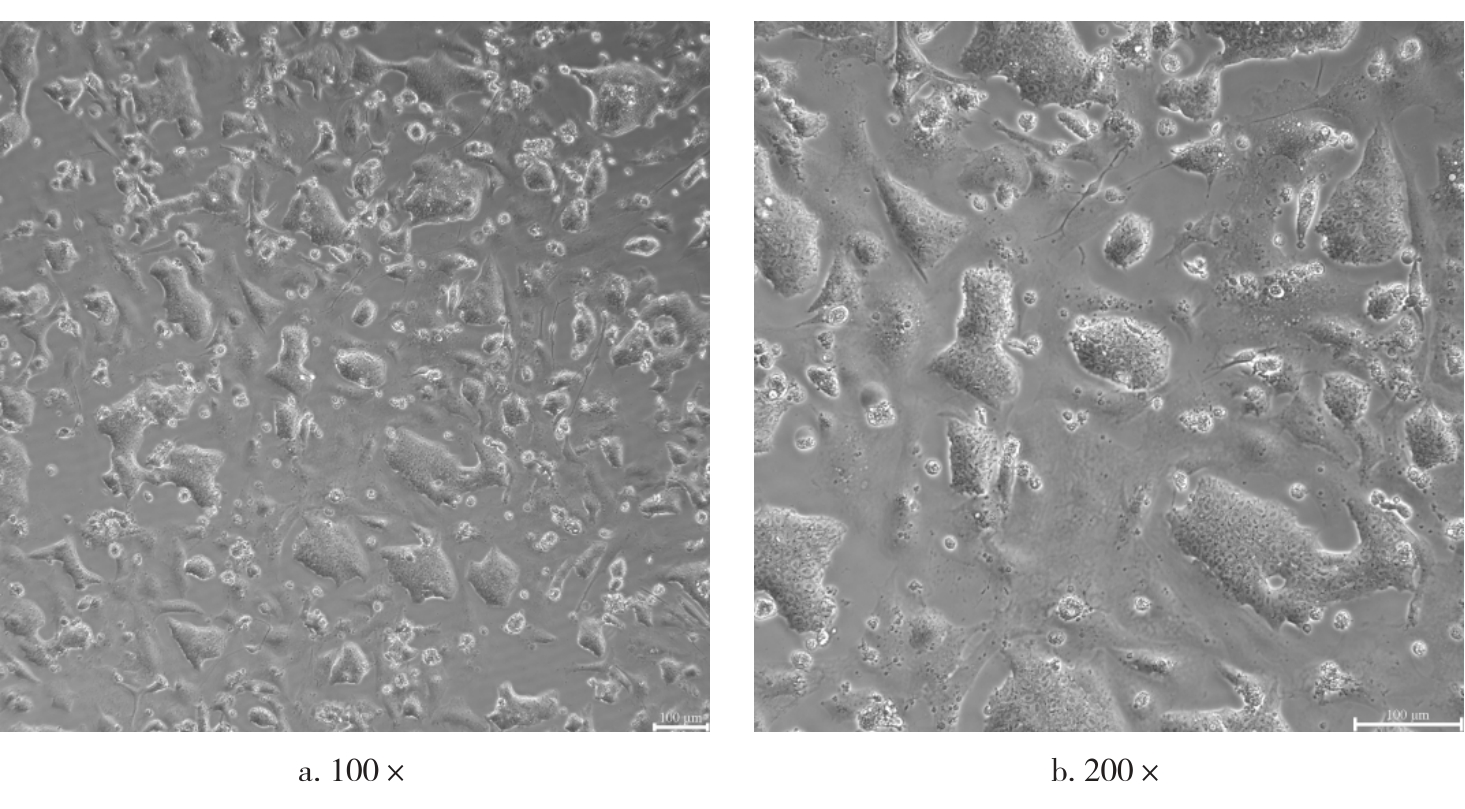
Fig.1

Chicken embryonic stem cells"

Table 2

Common molecular markers of avian ES cells"

类别

Category

分子标记物

Molecular marke

表达特征

Expression pattern

功能意义

Functional significance

检测技术

Detection method

参考文献Reference

核心转录因子

Core transcription factors

POU5F3 (PouV) 细胞核高表达 维持多能性核心调控因子,替代哺乳动物OCT4功能 免疫荧光、Western Blot [8]
NANOG 细胞核高表达 维持自我更新,抑制分化 免疫荧光、RT-qPCR [12]
SOX3 细胞核高表达 替代哺乳动物SOX2功能,参与多能性调控 免疫荧光、RNA-seq [4]
SALL4 细胞核高表达 与POU5F3协同调控多能性网络 免疫荧光、RT-qPCR [8]
KLF2 细胞核高表达 维持多能性,抑制分化;支持自我更新 RT-qPCR、免疫荧光、RNA-seq [9-11]
KLF5 细胞核高表达 维持多能性的关键调控因子,抑制分化且在禽类中取代哺乳动物KLF4的核心作用,促进多能性网络稳定 RT-qPCR、Western Blot、免疫荧光 [9-11]
KLF6 细胞核高表达 与KLF5协同,调控多能性基因并参与抑制分化路径 RNA-seq、RT-qPCR、免疫荧光 [9-11]
KLF4 细胞核低表达 在chESCs中非主导,但部分参与核心网络。整体在禽类中被KLF2/5/6部分取代 RT-qPCR、RNA-seq [9-11]

表面抗原

Surface antigens

SSEA-1 细胞膜阳性 未分化状态标志,表达呈异质性 流式细胞术、免疫荧光 [7]
EMA-1 细胞膜阳性 禽类特异性表面抗原 流式细胞术、免疫荧光 [13]
Integrin α6β1 细胞膜高表达 介导细胞与基质粘附,维持干细胞微环境 流式细胞术 [14]

功能蛋白

Functional proteins

碱性磷酸酶 高活性 未分化状态经典标志 组织化学染色 [10]
LIN28A/B 细胞质高表达 调控microRNA,维持多能性 Western Blot、RT-qPCR [4]
TERT 高表达 维持端粒长度,支持长期增殖 RT-qPCR [10]

生殖细胞标记

Germ cell markers

DAZL 分化后表达 生殖细胞分化标志 免疫荧光、RT-qPCR [8]
CVH 分化后表达 禽类VASA同源物,生殖细胞特异 原位杂交、RT-qPCR [15]

Table 3

Germ layer-specific genes in embryoid bodies"

类胚体标记基因Embryoid body marker genes 关键基因Critical genes 表达水平Expression level 参考文献References

外胚层

Ectoderm

NeuroG1 [4]
Sox1 [4,8]
Nestin [4,18]

中胚层

Mesoderm

Gsc [4]
T [4]
Pdgfa0 [4]

内胚层

Endoderm

Gata6 [4]
Pdx1 [4]
Foxa2 [4]

多能性基因

Pluripotency genes

Nanog [4,8,11-12]
Pou5f3 [4]
Sall4 [4,8]

Fig. 2

Isolation of the blastodisc using the paper ring method"

Fig. 3

Development timeline of key technologies in avian embryonic stem cells (2010–2025) and future prospects"

Table 4

Functions of key components in culture systems for stable maintenance of avian embryonic stem cells in vitro"

培养体系Culture system

名称

Name

功能和意义

Function and significance

OT/2i 卵转铁蛋白 卵转铁蛋白是卵黄中维持cESCs自我更新的最关键成分
IWR-1 一种Wnt/nt/1最关键成分信号通路抑制剂,适度的Wnt信号抑制对维持禽类多能态至关重要
Go6983 一种PKC信号通路抑制剂,与IWR-1协同作用,压制诱导分化的信号
OT/3i SB431542 通过抑制Activin/TGF-i受体ALK4/5/7来阻止这一分化路径
OT/3i/chLIF chLIF 通过激活JAK/STAT3通路有效抑制cESCs的分化

Fig. 4

Intra-/interspecies chimeras"

[1]
MARTIN G R, EVANS M J. The morphology and growth of a pluripotent teratocarcinoma cell line and its derivatives in tissue culture[J]. Cell, 1974, 2(3): 163-172.
[2]
PANDA S K, MCGREW M J. Genome editing of avian species: implications for animal use and welfare[J]. Laboratory Animals, 2022, 56(1): 50-59.
[3]
PETITTE J N, CLARK M E, LIU G, et al. Production of somatic and germline chimeras in the chicken by transfer of early blastodermal cells[J]. Development, 1990, 108(1): 185-189.
[4]
CHEN X, GUO Z, TONG X Y, et al. Derivation of embryonic stem cells across avian species[J]. Nature Biotechnology, 2025: 1-13.
[5]
BRYJA V, BONILLA S, ARENAS E. Derivation of mouse embryonic stem cells[J]. Nature Protocols, 2006, 1(4): 2082-2087.
[6]
张亚妮, 杨海燕, 施青青, 等. 鸡胚胎干细胞的分离及其嵌合体制备条件探索[J]. 中国畜牧杂志, 2012, 48(21): 28-31.
ZHANG Y N, YANG H Y, SHI Q Q, et al. Isolation of chicken embryonic stem cell and exploring the preparation conditions of chicken chimeric[J]. Chinese Journal of Animal Science, 2012, 48(21): 28-31.
[7]
何文俊, 刘红, 叶玲玲, 等. 鸡胚胎干细胞的体外培养和鉴定[J]. 生物技术通报, 2013, 29(7): 94-98.
HE W J, LIU H, YE L L, et al. Culture and characterization of chicken embryonic stem cells in vitro [J]. Biotechnology Bulletin, 2013, 29(7): 94-98.
[8]
JEAN C, OLIVEIRA N M M, INTARAPAT S, et al. Transcriptome analysis of chicken ES, blastodermal and germ cells reveals that chick ES cells are equivalent to mouse ES cells rather than EpiSC[J]. Stem Cell Research, 2015, 14(1): 54-67.
[9]
KAGAMI H. Perspectives on avian stem cells for poultry breeding[J]. Animal Science Journal, 2016, 87(9): 1065-1075.
[10]
LAVIAL F, PAIN B. Chicken embryonic stem cells as a non-mammalian embryonic stem cell model[J]. Development, Growth & Differentiation, 2010, 52(1): 101-114.
[11]
KIM S Y, KIM M J, JUNG H, et al. Comparative proteomic analysis of human somatic cells, induced pluripotent stem cells, and embryonic stem cells[J]. Stem Cells and Development, 2012, 21(8): 1272-1286.
[12]
CHOI H J, JIN S D, RENGARAJ D, et al. Differential transcriptional regulation of the NANOG gene in chicken primordial germ cells and embryonic stem cells[J]. Journal of Animal Science and Biotechnology, 2021, 12(1): 40.
[13]
LAVIAL F, ACLOQUE H, BERTOCCHINI F, et al. The Oct4 homologue PouV and Nanog regulate pluripotency in chicken embryonic stem cells[J]. Development, 2007, 134(19): 3549-3563.
[14]
ZHOU Z J, QU J, HE L, et al. α6-Integrin alternative splicing: distinct cytoplasmic variants in stem cell fate specification and niche interaction[J]. Stem Cell Research & Therapy, 2018, 9(1): 122.
[15]
LAVIAL F, ACLOQUE H, BACHELARD E, et al. Ectopic expression of Cvh (Chicken Vasa homologue) mediates the reprogramming of chicken embryonic stem cells to a germ cell fate[J]. Developmental Biology, 2009, 330(1): 73-82.
[16]
XIONG C X, WANG M Y, LING W H, et al. Advances in isolation and culture of chicken embryonic stem cells in vitro [J]. Cellular Reprogramming, 2020, 22(2): 43-54.
[17]
ZHANG L, WU Y N, LI X, et al. An alternative method for long-term culture of chicken embryonic stem cell in vitro [J]. Stem Cells International, 2018, 2018(1): 2157451.
[18]
BOAST S, STERN C D. Simple methods for generating neural, bone and endodermal cell types from chick embryonic stem cells[J]. Stem Cell Research, 2013, 10(1): 20-28.
[19]
ZHANG Y N, YANG H Y, ZHANG Z T, et al. Isolation of chicken embryonic stem cell and preparation of chicken chimeric model[J]. Molecular Biology Reports, 2013, 40(3): 2149-2156.
[20]
RICH A, LU Z Q, DE SIMONE A, et al. Decaying and expanding Erk gradients process memory of skeletal size during zebrafish fin regeneration[EB/OL]. bioRxiv, 2025, DOI:10.1101/2025.01.23.634576 .
[21]
MOSSAHEBI-MOHAMMADI M, QUAN M Y, ZHANG J S, et al. FGF signaling pathway: a key regulator of stem cell pluripotency[J]. Frontiers in Cell and Developmental Biology, 2020, 8: 79.
[22]
AUBEL P, PAIN B. Chicken embryonic stem cells: establishment and characterization[M]//ALBERIO R. Epiblast Stem Cells: Methods and Protocols. Totowa, NJ: Humana Press, 2013: 137-150.
[23]
TAI C I, YING Q L. Gbx2, a LIF/Stat3 target, promotes reprogramming to and retention of the pluripotent ground state[J]. Journal of Cell Science, 2013, 126(Pt 5): 1093-1098.
[24]
REN W J, WU J, LU X H, et al. Influence and optimization of diverse culture systems on chicken embryonic stem cell culture[J]. Genes, 2024, 15(11): 1400.
[25]
FARZANEH M, ZARE M, HASSANI S N, et al. Effects of various culture conditions on pluripotent stem cell derivation from chick embryos[J]. Journal of Cellular Biochemistry, 2018, 119(8): 6325-6336.
[26]
LIAO H Y, WU J H, VANDUSEN N J, et al. CRISPR-Cas9-mediated homology-directed repair for precise gene editing[J]. Molecular Therapy Nucleic Acids, 2024, 35(4): 102344.
[27]
HUANG J, HE B B, WU J. Recent advances in interspecies chimeras and organogenesis[J]. Current Opinion in Genetics & Development, 2025, 93: 102368.
[28]
QIN C, JIANG S Y, XU K, et al. One-step genetic modification by embryonic doral aorta injection of adenoviral CRISPR/Cas9 vector in chicken[J]. International Journal of Molecular Sciences, 2024, 25(16): 8692.
[29]
SARNELLA A, FERRARA Y, TERLIZZI C, et al. The chicken embryo: an old but promising model for in vivo preclinical research[J]. Biomedicines, 2024, 12(12): 2835.
[30]
BOISSY R E, SMYTH J R Jr, FITE K V. Progressive cytologic changes during the development of delayed feather amelanosis and associated choroidal defects in the DAM chicken line. A vitiligo model[J]. The American Journal of Pathology, 1983, 111(2): 197-212.
[31]
KWON M S, KOO B C, KIM D, et al. Generation of transgenic chickens expressing the human erythropoietin (hEPO) gene in an oviduct-specific manner: production of transgenic chicken eggs containing human erythropoietin in egg whites[J]. PLoS One, 2018, 13(5): e0194721.
[32]
李鑫璐, 李浩杰, 谭磊, 等. 家禽胚胎干细胞研究进展及其应用[J]. 畜牧与兽医, 2025, 57(5): 140-146.
LI X L, LI H J, TAN L, et al. Recent advances in avian embryonic stem cell research and applications[J]. Animal Husbandry & Veterinary Medicine, 2025, 57(5): 140-146.
[33]
WORKINEH D, BITEW M, OLUWAYELU D, et al. Comparative safety, immunogenicity, and efficacy of CEF cell-based and DF-1 cell line adapted infectious bursal disease vaccines in specific-pathogen-free chickens[J]. Journal of Immunology Research, 2022, 2022(1): 5392033.
[34]
PARK J S, LEE K Y, HAN J Y. Precise genome editing in poultry and its application to industries[J]. Genes, 2020, 11(10): 1182.
[35]
MERTZ M, HETZEL T, ALEX K, et al. Interdisciplinary animal research ethics—challenges, opportunities, and perspectives[J]. Animals, 2024, 14(19): 2896.
[36]
ILTIS A S, KOSTER G, REEVES E, et al. Ethical, legal, regulatory, and policy issues concerning embryoids: a systematic review of the literature[J]. Stem Cell Research & Therapy, 2023, 14(1): 209.
[1] Liting Lu, Jing Wang, Yang Yu, Shigang Gu, Yi Zhang, Yurong Zhang, Dawei Yu, Yongye Huang. Conservation of endangered cattle germplasm resources: Technological integration and paradigm shift [J]. Chinese Livestock and Poultry Breeding, 2026, 22(9): 78-84.
[2] Bo Liu, Saizheng Han, Fangfang Sha, Wenwen Shen, Zihuai Tang, Weiwei Wu, Wenxin Zheng, Shiwei Zhou, Yinghui Wei, Xiaolong Wang. Challenges and prospects of generating cloned animals with livestock embryonic stem cells (ESCs) [J]. Chinese Livestock and Poultry Breeding, 2026, 22(9): 55-65.
[3] Wanli Cheng, Mingyu Yang, Lei Xi, Zhuanjian Li, Yujie Guo. Research progress and prospects of intelligent measurement technologies for important phenotypes in livestock and poultry [J]. Chinese Livestock and Poultry Breeding, 2026, 22(7): 7-16.
[4] Jinwei Fan, Ziqi Zhong, Deyou Pan, Zhiqing Su, Siyu Liu, Zheng Yang, Guanyu Hou, Qian Xiao. Research progress of multi-omics technology in poultry genetic breeding [J]. Chinese Livestock and Poultry Breeding, 2026, 22(7): 45-52.
[5] Ruiqi Cheng, Huaqian Zhou, Hua Yang, Yonglin Yang, Qian Yu, Wenzhe Zhang, Yan Chen, Zongsheng Zhao, lei Cui, Chunping Ma. Research progress on SNP chip development and its application in livestock and poultry genetic breeding [J]. Chinese Livestock and Poultry Breeding, 2026, 22(5): 61-69.
Viewed
Full text


Abstract

Cited

  Shared   
  Discussed   
No Suggested Reading articles found!