v

Chinese Livestock and Poultry Breeding ›› 2026, Vol. 22 ›› Issue (8): 68-78.doi: 10.19543/j.cnki.1673-4556.20260707.002cstr: 32418.14.j.cnki.1673-4556.20260707.002

• Germplasm Utilization • Previous Articles     Next Articles

Study on the current situation of genetic resources and identification of germplasm characteristics of Tibetan gray cattle

Suolang Quji1,2, Pubu Zhandui1,2, Bin Li1,2, Silang Wangmu1,2, Dongxu Wen1,2, Li Zhao1,2, Gama Yangzong3, Ciren Luobu1,2, Xiaoying Chen1,2, Ma Ni1,2, Xire Qiangma1,2, Dawa1,2, Zhaxi Jiancan4, Laba Ciren5, Nan Zhang5, Yi Ma6, Ningbo Chen7   

  1. 1. Institute of Animal Husbandry and Veterinary Medicine, Tibet Academy of Agricultural Sciences, Lhasa, 850009, Xizang
    2. Key Laboratory of Animal Genetics and Breeding on Tibetan Plateau, Ministry of Agriculture and Rural Affairs, Lhasa, 850009, Xizang
    3. Comprehensive Agricultural and Animal Husbandry Service Center of Langkazi, Langkazi, 851100, Xizang
    4. Comprehensive Agricultural and Animal Husbandry Service Center of Dalong Town, Langkazi, 851100, Xizang
    5. Animal Husbandry Station of Tibet Autonomous Region, Lhasa, 850000, Xizang
    6. Tianjin Academy of Agricultural Sciences, Tianjin, 300192
    7. College of Animal Science and Technology, Northwest A&F University, Yangling, 712100, Shaanxi
  • Received:2026-03-24 Online:2026-08-26 Published:2026-07-31

Abstract:

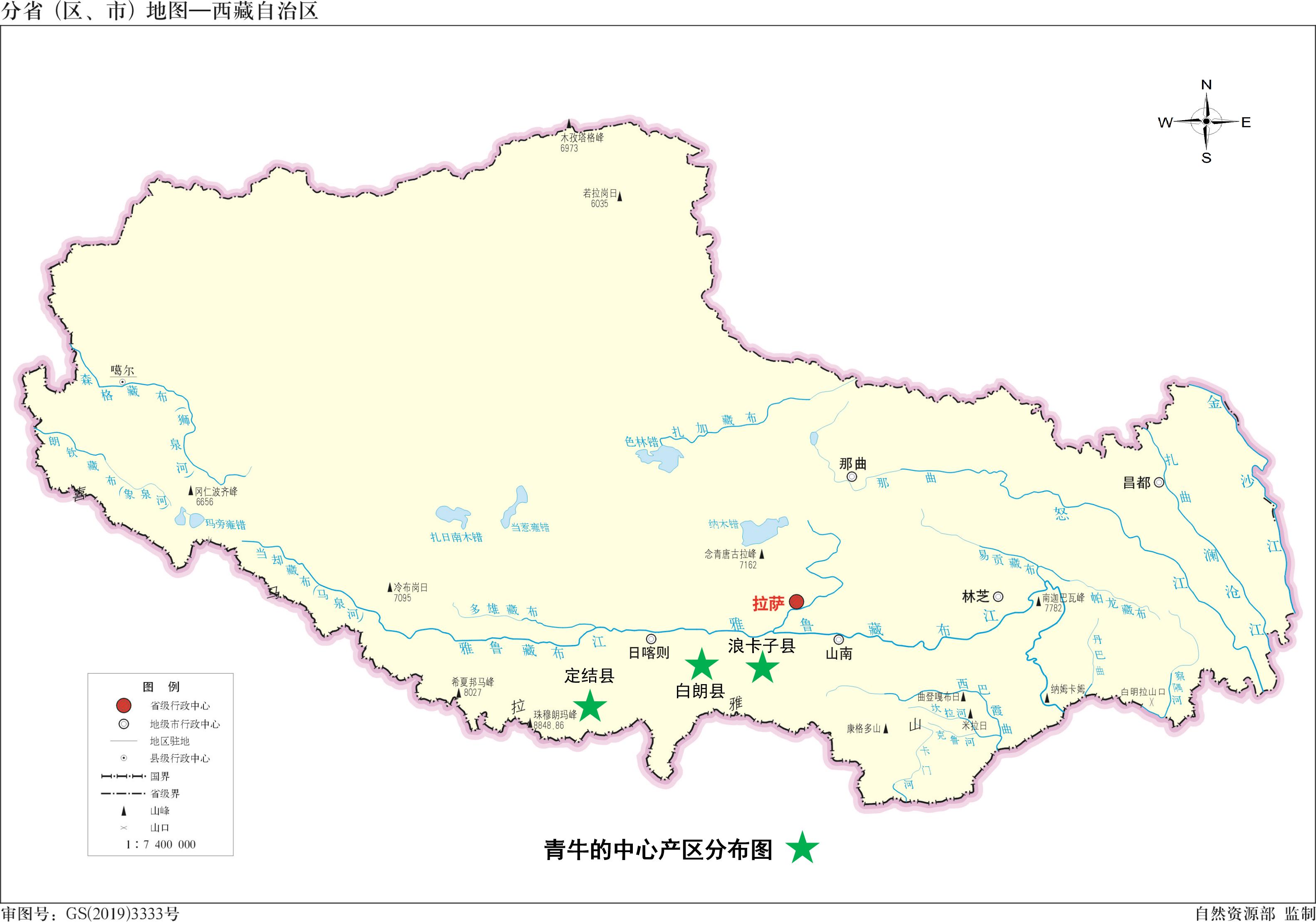
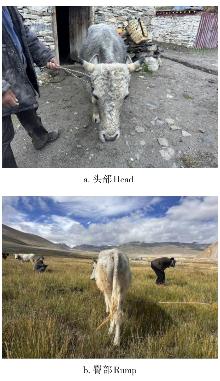
Objective To evaluate the resource status, germplasm characteristics and development potential of Tibetan gray cattle, and thereby clarify their status as an independent genetic resource. Method This study focused on Shannan City as the research scope, and conducted investigations and analysis of the cattle. In September-October of 2023, the team completed field surveys, data collection, body measurement, production performance investigation, and combined with molecular genetic analysis by integrating genomic data of 98 Tibetan cattle. Result The results showed that the core distribution area of Tibetan gray cattle is located in Langkazi and Luozha counties of Shannan City, as well as Bailang, Dingjie and Kangma counties of Shigatse City, Tibet Autonomous Region, with an average altitude exceeding 4000 meter above sea level. The population size was approximately 3100 head at the end of 2021. Tibetan gray cattle are characterized by a distinctive iron-gray or bluish-gray coat color. Phenotypically, they exhibit predominantly white facial markings, white horns with black tips and a robust body conformation. Moreover, they possess strong adaptability to cold climates, efficient utilization of coarse forage resources and remarkable tolerance to high-altitude environments. Morphometric analyses revealed significant differences (P < 0.05) in body height, body length, bust and shank circumference among different age groups. Production performance evaluation indicated that the average daily milk yield of Tibetan gray cattle was 3.60 kilogram, ranging from 1.50 to 9.00 kilogram per day. Population genetic analyses based on 104339970 high-quality single nucleotide polymorphisms demonstrated that Tibetan gray cattle formed a stable monophyletic lineage with a relatively homogeneous and stable genetic composition. Furthermore, the population exhibited high genetic consistency within the breed and clear genetic differentiation from other Tibetan cattle populations, supporting its status as a genetically distinct population with an independent genetic structure. These findings demonstrate that Tibetan gray cattle possess a unique genetic background and an independent population genetic structure, supporting their recognition as a distinct indigenous cattle genetic resource on the Qinghai-Tibet Plateau. Conclusion The research has clarified the distribution area, population size, phenotypic characteristics and independent genetic traits of the Tibetan gray cattle. It revealed that they face high risks of inbreeding depression, imperfect conservation system and an unoptimized breeding structure.

Key words: Tibetan gray cattle, Resource status, Germplasm characteristics

CLC Number: 

  • S823

Fig. 1

Distribution map of central production areas of Tibetan gray cattle Note: The map comes from the National Geographic Service Information Public Service Platform ( http://bzdt.ch.mnr.gov.cn/)."

Table 1

Sample information statistics of 98 samples"

品种Breeds

原产地

Origins

样本数No. of samples

数据来源

Data sources

定结牛Dingjie Cattle 西藏 43 PRJNA905718; PRJNA1158668
迪庆牛Diqing Cattle 云南 9 PRJNA905718
浪卡子牛Langkazi Cattle 西藏 10 PRJNA1158668
日喀则牛Shigatse Cattle 西藏 5 PRJNA905718
昌都牛Changdu Cattle 西藏 7 PRJNA379859
樟木牛Zhangmu Cattle 西藏 2 PRJNA597241
玉树黄牛Yushu Yellow Cattle 青海 22 PRJNA905718

Table 2

Population stock size of Tibetan gray cattle in 2021"

序号No. 县County 存栏Stock size/头
1 浪卡子县 1100
2 洛扎县 780
3 白朗县 710
4 定结县 830
5 康马县 750
合计Total 3100

Fig. 2

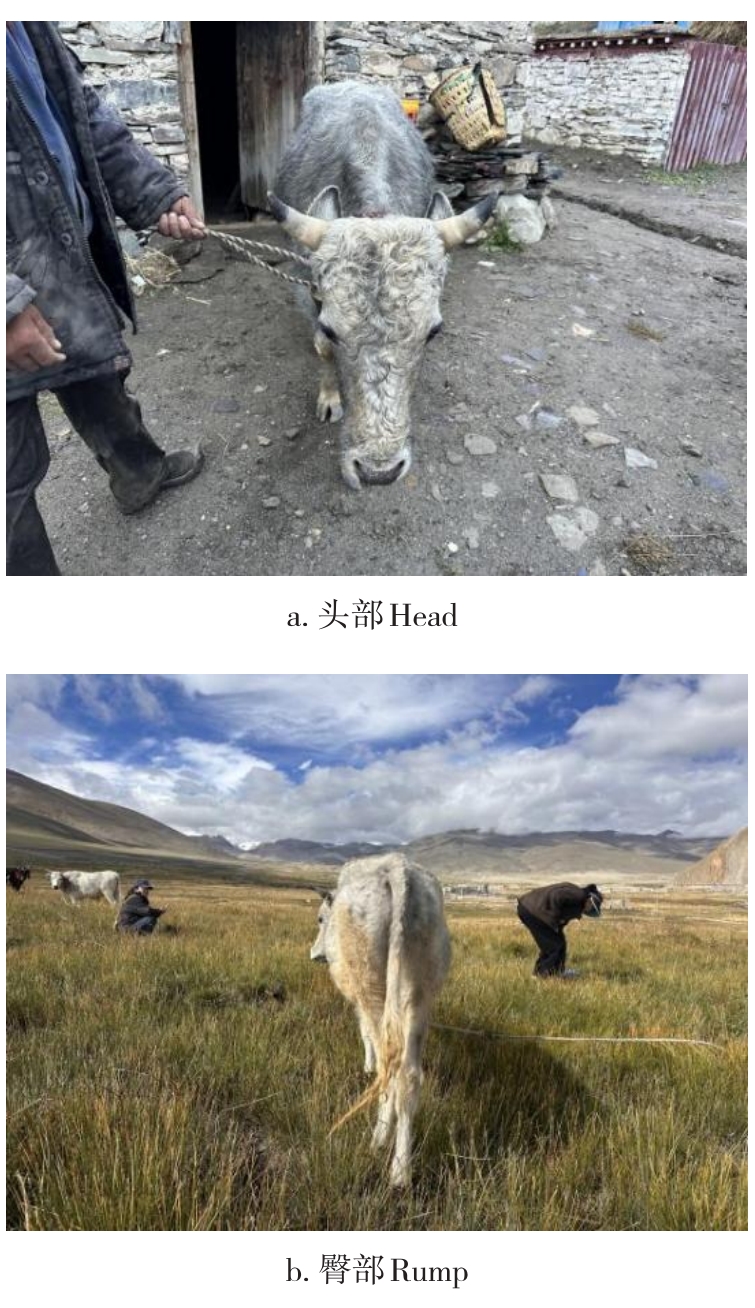
Head and rump characteristics of Tibetan gray cattle Note: The author 's team took photos in Linxi Community, Dalong Town, Langkazi County, Shannan City, Xizang Autonomous Region."

Fig. 3

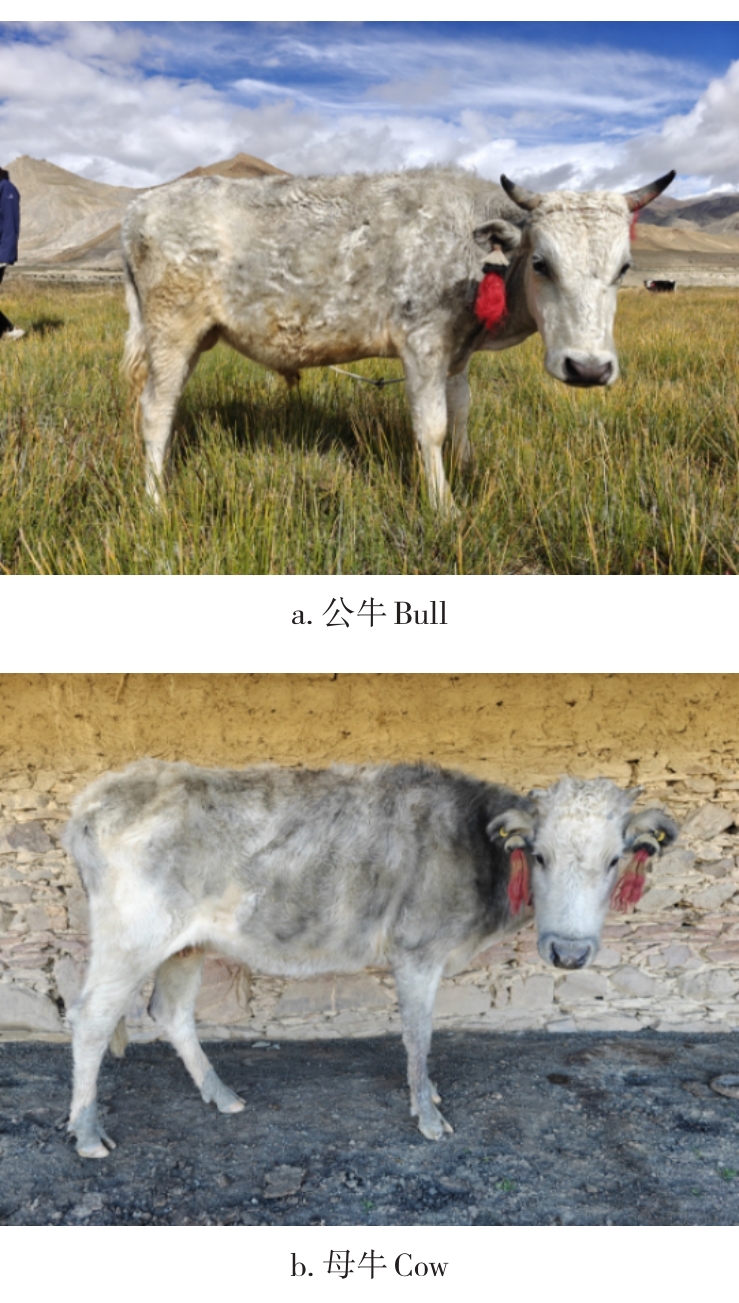
Tibetan gray cattle"

Table 3

Body measurement indicators of Tibetan gray cattle"

指标Index 公牛Bull 母牛Cow
青年期(1~3岁) 成年期(>3岁) 幼年期(0~1岁) 青年期(1~3岁) 成年期(>3岁)
调查头数Number/头 8 4 5 20 63
体高Body height/cm 94.13±6.90 103.50±1.29 73.20±4.15 95.30±6.30 105.02±8.89
体长Body length/cm 105.38±13.27 126.00±14.02 72.40±6.02 105.90±10.48 118.94±12.66
胸围Bust/cm 133.00±15.51 155.38±15.32 91.40±6.27 131.28±10.05 149.79±10.99
管围Shank circumference/cm 15.75±3.88 17.00±2.16 11.60±2.07 14.13±2.26 15.33±2.78

Table 4

Normality and homogeneity of variance tests of body measurements for Tibetan gray cattle by age"

指标

Index

组别

Group

均值 ± 标准差 Mean±SD

偏度

Skewness

峰度

Kurtosis

正态性检验 S-W P 方差齐性 Levene P
体高Body height/cm 幼年期(0~1岁) 73.20 ± 4.15 -0.971 -0.473 0.390 0.067
青年期(1~3岁) 94.96 ± 6.37 -0.244 -0.992 0.291
成年期(>3岁) 104.93 ± 8.63 -0.073 -0.264 0.870
体长Body length/cm 幼年期(0~1岁) 72.40 ± 6.02 2.049 4.398 0.015 0.210
青年期(1~3岁) 105.75 ± 11.09 -0.010 -0.928 0.600
成年期(>3岁) 119.37 ± 12.74 0.237 -0.324 0.586
胸围Bust/cm 幼年期(0~1岁) 91.40 ± 6.27 -0.489 -1.764 0.651 0.391
青年期(1~3岁) 131.77 ± 11.58 0.283 1.717 0.324
成年期(>3岁) 150.12 ± 11.22 -0.113 -0.597 0.577
管围Shank circumference/cm 幼年期(0~1岁) 11.60 ± 2.07 1.447 1.931 0.171 0.747
青年期(1~3岁) 14.59 ± 2.84 1.607 2.061 0.000
成年期(>3岁) 15.43 ± 2.77 1.878 3.143 0.000

Table 5

Non-parametric tests of body measurements for Tibetan gray cattle by age"

指标Index

幼年期(0~1岁)

Childhood (0~1 years)

青年期(1~3岁)

Adolescence(1~3 years)

成年期(>3岁)

Adulthood (> 3 years)

H P
体高Body height/cm 75 (69, 76.5) 95(90, 101) 105 (99, 110) 35.472 < 0.001***
体长Body length/cm 70 (69, 77) 106 (96.25, 115) 119 (110, 128) 31.351 < 0.001***
胸围Bust/cm 93 (85, 97) 132 (123.5, 139) 150 (140, 158) 44.330 < 0.001***
管围Shank circumference/cm 11 (10, 13.5) 13.25 (13, 15.75) 15 (14, 16) 13.899 < 0.001***

Table 6

Statistics of daily milk yield of Tibetan gray cattle at different ages"

牛只年龄

Age/岁

测定头数

Number/头

最小值

Min/kg

最大值

Max/kg

平均日产奶量

Average daily milk production /kg

标准差

SD

合计 69 1.5 9 3.60 0.96
3 7 2 5 3.43 0.98
4~6 38 1.5 9 3.58 1.15
>6 24 2.5 5 3.67 0.60

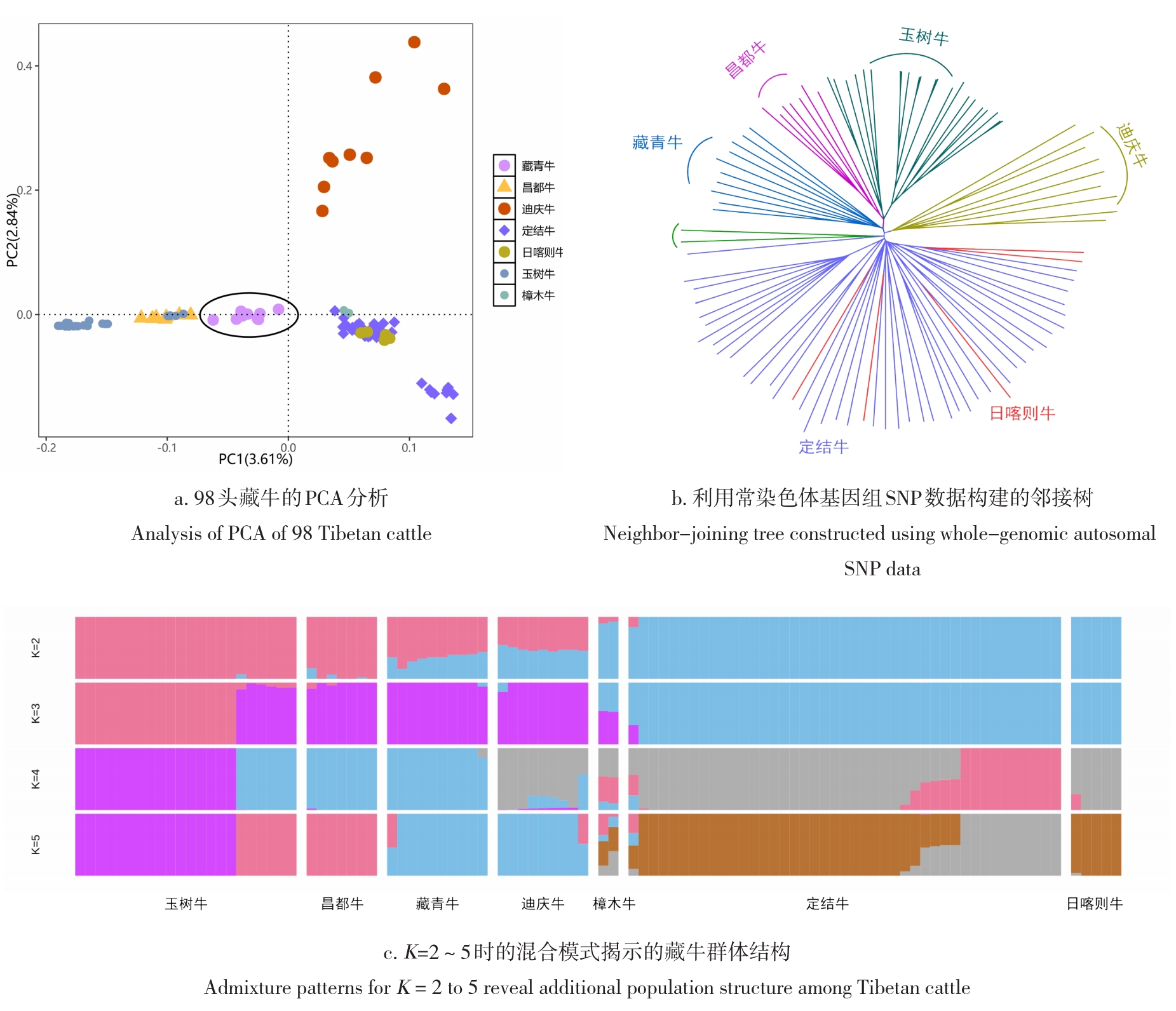
Fig. 4

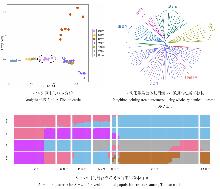
Population genetic structure and kinship of Tibetan cattle"

[1]
国家畜禽遗传资源委员会. 中国畜禽遗传资源志·牛志[M]. 北京: 中国农业出版社, 2011.
National Committee of Animal Genetic Resources. Annals of Chinese Livestock and Poultry Genetic Resources · Cattle Volume [M]. Beijing: China Agriculture Press, 2011.
[2]
中国农业科学院畜牧研究所. 中国黄牛生态种特征及其利用方向[M]. 北京: 农业出版社, 1990.
Chinese Academy of Agricultural Sciences Institute of Animal Husbandry. Ecological Breed Characteristics and Utilization Directions of Chinese Cattle[M]. Beijing: China Agriculture Press, 1990.
[3]
ZHAO M, KONG Q P, WANG H W, et al. Mitochondrial genome evidence reveals successful Late Paleolithic settlement on the Tibetan Plateau[J]. Proceedings of the National Academy of Sciences of the United States of America, 2009, 106(50): 21230-21235.
[4]
CHEN N B, CAI Y D, CHEN Q M, et al. Whole-genome resequencing reveals world-wide ancestry and adaptive introgression events of domesticated cattle in East Asia[J]. Nature Communications, 2018, 9: 2337.
[5]
CHEN N B, ZHANG Z W, HOU J W, et al. Evidence for early domestic yak, taurine cattle, and their hybrids on the Tibetan Plateau[J]. Science Advances, 2023, 9(50): eadi6857.
[6]
XIA X T, WANG F W, LUO X Y, et al. Structural variations associated with adaptation and coat color in Qinghai-Tibetan Plateau cattle[J]. Advanced Science, 2025, 12(31): e03258.
[7]
LYU Y, WANG F W, CHENG H J, et al. Recent selection and introgression facilitated high-altitude adaptation in cattle[J]. Science Bulletin, 2024, 69(21): 3415-3424.
[8]
姚婷婷, 李昊, 阎卉萱, 等. 西藏自治区10个黄牛群体的mtDNA遗传多样性与母系起源研究[J]. 畜牧兽医学报, 2025, 56(5): 2194-2202.
YAO T T, LI H, YAN H X, et al. Genetic diversity of mitochondrial genome and maternal origin of 10 cattle populations in Tibet Autonomous Region[J]. Acta Veterinaria et Zootechnica Sinica, 2025, 56(5): 2194-2202.
[9]
阎卉萱, 姚婷婷, 曹一凡, 等. 青藏高原黄牛父系遗传多样性研究[J]. 农业生物技术学报, 2025, 33(8): 1755-1766.
YAN H X, YAO T T, CAO Y F, et al. Study on paternal genetic diversity of cattle (Bos taurus) in Qinghai-Tibet Plateau[J]. Journal of Agricultural Biotechnology, 2025, 33(8): 1755-1766.
[10]
WU D D, DING X D, WANG S, et al. Pervasive introgression facilitated domestication and adaptation in the Bos species complex[J]. Nature Ecology & Evolution, 2018, 2(7): 1139-1145.
[11]
吕阳. 青藏高原黄牛基因组遗传多样性与高海拔环境适应性研究[D]. 杨凌: 西北农林科技大学, 2024.
LV Y. Genetic diversity and adaptability to high altitude environment of cattle on Tibetan Plateau[D]. Yangling: Northwest A&F University, 2024.
[12]
BROMMAGE R, LIU J, VOGEL P, et al. NOTUM inhibition increases endocortical bone formation and bone strength[J]. Bone Research, 2019, 7: 2.
[13]
邓磊. 西藏牛低氧适应性相关circRNAs的筛选研究[D]. 成都: 西南民族大学, 2020.
DENG L. Screening of circRNAs related to hypoxia adaptability in Tibetan cattle[D]. Chengdu: Southwest Minzu University, 2020.
[14]
WANG H, ZHONG J C, WANG J K, et al. Whole-transcriptome analysis of yak and cattle heart tissues reveals regulatory pathways associated with high-altitude adaptation[J]. Frontiers in Genetics, 2021, 12: 579800.
[15]
陈宁博, 夏小婷, 阎卉萱, 等.一种利用牛6号染色体拷贝数变异鉴定斑点瘤牛品种的方法:202510219707[P]. [2025-10-17].
CHEN N B, XIA X T, YAN H X, et al. A method for identifying spotted indicine cattle breeds using copy number variation on bovine chromosome 6: 202510219707[P]. [2025-10-17].
[16]
李斌. 西藏黄牛改良工作的问题及建议[J]. 中国畜牧兽医文摘, 2018, 34(5): 87.
LI B. Problems and Suggestions on the Improvement of Tibetan Cattle[J]. Chinese Journal of Animal Husbandry and Veterinary Medicine, 2018, 34(5): 87.
[17]
樊凤霞, 马进寿. 牦牛生产性能低下原因及提高措施[J]. 畜牧兽医科学(电子版), 2020(16): 29-30.
FAN F X, MA J S. Reasons and improving measures of yak’s low production performance[J]. Graziery Veterinary Sciences (Electronic Version), 2020(16): 29-30.
[18]
辛盛鹏, 普布次仁, 石达, 等. 西藏黄牛改良策略[J]. 中国牧业通讯, 2009(15): 33-36.
XIN S P, PU B, SHI D, et al. Improvement strategy of Xizang yellow cattle[J]. China Animal Husbandry Bulletin, 2009(15): 33-36.
[19]
洛桑次仁, 米玛顿珠. 西藏山南地区黄牛改良现状及对策研究[J]. 畜禽业, 2014, 25(8): 52-54.
LUO S, MI M. Study on the present situation and countermeasures of yellow cattle improvement in Shannan area of Xizang[J]. Livestock and Poultry Industry, 2014, 25(8): 52-54.
[20]
色珠, 奥斯曼, 巴桑珠扎, 等. 西藏黄牛改良工作成果与发展的主要措施和政策建议[J]. 中国奶牛, 2008(11): 52-55.
SE Z, AO S M, AO S M, et al. Main measures and policy suggestions on the achievements and development of yellow cattle improvement in Xizang[J]. China Dairy Cattle, 2008(11): 52-55.
[21]
任洪辉. 文山牛遗传评价及体尺性状相关功能基因发掘与初步验证[D]. 昆明: 云南农业大学, 2024.
REN H H. Genetic Evaluation and Exploration and Preliminary Verification of Functional Genes Related to Body Measurement Traits in Wenshan Cattle[D]. Kunming: Yunnan Agricultural Universit, 2024
[22]
崔红梅, 郭成裕, 娄世尧, 等. 我国地方黄牛品种: 文山黄牛种质特性的研究[J]. 现代畜牧兽医, 2011(6): 65-66.
CUI H M, GUO C Y, LOU S Y, et al. Study on germplasm characteristics of Wenshan yellow cattle, a local yellow cattle breed in China[J]. Modern Journal of Animal Husbandry and Veterinary Medicine, 2011(6): 65-66.
[23]
刘鲲鹏, 布仁朝格图, 杨嘉蒙, 等. 青海牦牛、犏牛、黄牛体尺测定与改良选育[J]. 中国牛业科学, 2016, 42(6): 17-20, 24.
LIU K P, BU R C G T, YANG J M, et al. Body measurements and improvement breeding of Qinghai's yak, cattle-yak and cattle[J]. China Cattle Science, 2016, 42(6): 17-20, 24.
[24]
孔小艳, 李昕鹏, 张晓燕, 等. 荷斯坦牛冻精改良西藏黄牛的泌乳性能分析[J]. 中国牛业科学, 2022, 48(5): 26-29, 38.
KONG X Y, LI X P, ZHANG X Y, et al. Analysis of lactation performance of Tibetan yellow cattle improved by Holstein frozen semen[J]. China Cattle Science, 2022, 48(5): 26-29, 38.
[25]
任子利, 张敏, 赵彦玲, 等. 西藏畜牧业资源调查与肉牛肉羊养殖模式探讨[J]. 农业与技术, 2017, 37(14): 150-151, 212.
REN Z L, ZHANG M, ZHAO Y L, et al. Investigation on animal husbandry resources in Xizang and discussion on breeding mode of beef cattle and mutton sheep[J]. Agriculture and Technology, 2017, 37(14): 150-151, 212.
[26]
扎西. 黄牛改良工作中流产的原因与防控[J]. 中兽医学杂志, 2022(5): 91-93.
ZHA X. Causes and prevention of abortion in cattle improvement work[J]. Chinese Journal of Traditional Veterinary Science, 2022(5): 91-93.
[27]
达瓦桑杰. 西藏黄牛改良与良种选育及奶业发展现状与分析[J]. 西藏农业科技, 2025, 47(4): 70-75.
DA W S J. Research on improvement and selective breeding of cattle and development current situation of the dairy industry in Xizang[J]. Tibet Journal of Agricultural Sciences, 2025, 47(4): 70-75.
[1] Shasha Wang, Yonglian Dai, Xiao Huang, Liangpeng Lv, Tong Zhang, Ming Cheng, Lanqiang Lou. Research on the protection and exploitation of genetic resources of Jiaohe black goats [J]. Chinese Livestock and Poultry Breeding, 2026, 22(7): 77-82.
Viewed
Full text


Abstract

Cited

  Shared   
  Discussed   
No Suggested Reading articles found!