v
Breeding of New Varieties

Breeding of the Nongda No. 6 layer crossbreeding system

  • Shuo Li , 1 ,
  • Long Liu 2 ,
  • Tuoyu Geng 2 ,
  • Chuanwei Zheng 3 ,
  • Liang Chen 1 ,
  • Daoqing Gong , 2
Expand
  • 1. Jiangsu Beinongda Agricultural and Animal Husbandry Technology Co. , Ltd. , Taizhou, 225500, Jiangsu
  • 2. Yangzhou University, Yangzhou, 225001, Jiangsu
  • 3. Beinongda Technology Co. , Ltd. , Beijing, 102211

Received date: 2025-12-13

  Online published: 2026-07-18

Abstract

Objective To comply with the trend of independent innovation in China's layer breeding industry and the upgrading of pink-shell egg consumption, address the specific breeding needs of Jiangsu Province, and solve the problems of insufficient laying performance, high feed-to-egg ratio, poor uniformity, and low profitability of culled hens in existing specialty layer breeds, a three-line crossbreeding system of small-sized, green-footed, black-feathered pink-shell layers was developed. By utilizing a three-line mating pattern combining local chicken resources with high-yielding layers, this work aims to integrate high laying performance with specialty traits, enhance the competitiveness of Chinese layer breeds, meet the market demand for high-quality specialty eggs and high-value culled hens, and promote industrial efficiency and farmers' income. Method During the development of the "Nongda No.6" layer crossbreeding system, the terminal sire (line H) was bred based on the black-feathered green-footed local chicken of Dongtai, Jiangsu Province (derived from crossing the black-feathered Yuanbao chicken with the Guifei chicken). The slow-feathering line A (a maternal line of the "Nongda No.5" small-sized layer crossbreeding system) and the fast-feathering line K (a paternal line of the "Nongjin No.1" layer crossbreeding system), both of the Rhode Island Red standard breed, were introduced as the first sire and the maternal line, respectively. The breeding methods comprehensively integrated individual phenotypic selection, testcross selection (e.g., for black feather/green foot traits in line H and homozygosity for slow-feathering in line A), molecular marker-assisted selection (using the MC1R gene to screen for the black feather trait in line H), index selection (for egg number), and sib selection (for sex-limited traits in males). Through a multi-stage selection procedure from day-old chicks to 66 weeks of age (including avian leukosis and pullorum disease purification, semen quality testing, and egg quality measurement), key indicators such as feather color, shank color, body weight uniformity, age at first egg, egg number at 43 and 66 weeks, egg weight, eggshell strength, eggshell glossiness and color, Haugh unit, yolk ratio, fertilization and hatchability rates, as well as avian leukosis/pullorum positive rates were systematically measured for each line. The superior performance of the commercial generation, including pink-shell egg production, strong disease resistance, persistent laying peak, as well as the product advantages of high eggshell strength, moderate egg weight, shiny pink eggs, and high-quality black-feathered, green-footed, small-sized culled hens, was validated through pilot tests. Result The breeding results showed that the parental roosters of the "Nongda No.6" crossbreeding system are black-feathered, green-footed and fast-feathering, while the parental hens are dark red-feathered, yellow-footed and slow-feathering. After five generations of selection, the rates of black feather, green foot and fast-feathering in the terminal sire line H all reached 100%. The commercial generation chickens are black-feathered, green-footed and fast-feathering, and lay shiny pink-shell eggs. The egg number at 43 weeks was increased by 12.8 eggs in line H. The slow-feathering rate in the first sire line A reached 100%, and the egg number at 43 weeks was increased by 7.5 eggs. In the maternal line K, the egg weight at 43 weeks was reduced by 2.1 g, and the uniformity of eggshell color was improved. Through continuous disease purification, the positive rate of avian leukosis in line H decreased from 0.36% to 0.01%, while lines A and K, as well as all three lines for pullorum disease, became completely negative. In terms of production performance, the survival rate of commercial generation chickens from 0 to 18 weeks was over 98%, the number of eggs per hen housed at 72 weeks reached 282.7–284.7, the average egg weight was 50.3 g, the feed-to-egg ratio during the laying period was as low as 2.28∶1, and the eggshell strength at 43 weeks reached 4.08–4.51 kg/cm2, demonstrating comprehensive advantages including high egg production, low feed consumption, excellent egg quality and high residual value of culled hens. Conclusion The "Nongda No.6" layer crossbreeding system has successfully developed a specialty layer crossbreeding system characterized by high yield, superior quality and low input by integrating the black-feathered green-footed local chicken with the Rhode Island Red standard breed through systematic combining ability tests, pure line selection, molecular marker-assisted selection and disease purification. The Nongda No.6" not only aligns with the trends of the specialty consumer market but also meets the "two highs and one low" requirements of specialty layer farmers, i.e., low rearing cost for small to medium-sized hens, high egg price and high culled hen price. Therefore, it has broad prospects for promotion and application

Cite this article

Shuo Li , Long Liu , Tuoyu Geng , Chuanwei Zheng , Liang Chen , Daoqing Gong . Breeding of the Nongda No. 6 layer crossbreeding system[J]. The Chinese Livestock and Poultry Breeding, 2026 , 22(7) : 92 -100 . DOI: 10.19543/j.cnki.1673-4556.20260610.001

鸡蛋是廉价且优质的蛋白质营养来源,可提供人体生长和维持机体所需的大部分营养。我国是鸡蛋的生产和消费大国,鸡蛋产量常年稳居世界第一,鸡蛋产量接近世界鸡蛋总产量的四成左右[1],2024年,我国人均消费鸡蛋21.7 kg[2]。因此,在我国的饮食结构中,鸡蛋扮演着至关重要的角色。同时,我国也是世界上最大的禽肉生产和消费国,2024年我国禽肉产量达到2660万t;人均禽肉占有量为19.1 kg[3]
随着生活水平的提高和禽类产品种类的丰富,人们对高品质禽类产品的需求量也越来越大。地方特色蛋鸡蛋肉兼用,产品具有地方消费特色[4],且深受当地消费者欢迎,如在我国长三角地区,随着散养土鸡需求量的逐年攀升,消费者对淘汰鸡的外观性状(羽色、脚色、肤色等)愈发关注。相较于白羽黄脚,消费者更青睐于黑羽青脚鸡。养殖户也更加喜爱饲养具有高蛋价的高端鸡蛋(如绿壳蛋、小粉蛋)且淘汰蛋鸡售价较高的品种。因此,我国除了饲养主流的高产蛋鸡品种(海兰、迪卡红、海赛克斯粉、伊莎和罗曼等)[2]外,也培育出更符合我国居民传统消费习惯,满足多元化市场消费需求地方特色蛋鸡品种(苏禽绿壳、新杨黑鸡、农大3号等)[5]。但当前市场上的特色蛋鸡品种还存在一定的缺陷,如部分品种产蛋量低、料蛋比高或壳色和外形整齐度不高、淘汰鸡残值低等[6-7],也迫切需要培育蛋品口感、风味和外观等特征符合传统消费需求、生产性能优良的蛋鸡配套系[8]。在此背景下,立足江苏省特色养殖需求,江苏北农大农牧科技有限公司联合扬州大学和北农大科技股份有限公司开展青脚黑羽小型粉壳蛋鸡配套系培育,培育兼具优秀产蛋性能和鸡蛋、淘汰鸡品质的地方特色蛋鸡配套系,已促进产业提质增效和农民增收。本文现就农大6号蛋鸡配套系培育素材、培育方法和培育过程等作简要介绍,以期为其他品种的培育提供参考。

1 材料与方法

1.1 确定育种素材

为满足生产者对高产、产粉壳蛋且淘汰母鸡具有地方鸡种外观特征的蛋鸡品种需求,培育单位以黑羽青脚小体型鸡(贵妃鸡和元宝鸡杂交后代)为素材,与高产蛋鸡进行三系配套,生产符合特色蛋鸡市场需求的青脚黑羽小体型粉壳蛋鸡。终端父本选择纯合快羽、黑羽、青脚、产粉壳蛋的地方鸡种为素材;第一父本选择纯合慢羽、产褐壳蛋、抗病力强、产蛋数多、产蛋高峰维持时间长、蛋壳质量优的洛岛红标准品种。母本选择产褐壳蛋、抗病力强、产蛋数多、产蛋高峰维持时间长、蛋壳颜色均匀的洛岛红标准品种。

1.2 配合力测定

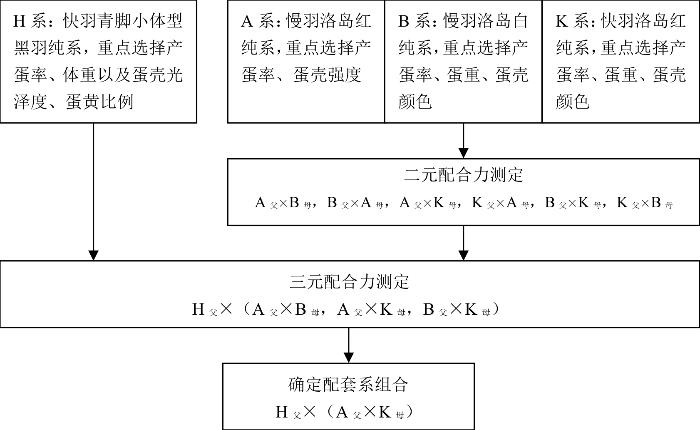
为筛选最优秀的母本配套组合,培育单位对3个高产褐壳品系(A系:慢羽洛岛红;B系:慢羽洛岛白;K系:快羽洛岛红)分别进行6个二元配套组合试验,对各组合的商品代蛋鸡进行了产蛋率、蛋壳颜色、料蛋比和蛋重等生产性能的测定。经过对测定结果的综合分析,选择其中的3个二元配套组合(A×B,A×K,B×K)与父本(地方黑羽品系,H系)进行三元配套组合试验。从各组合鸡群的外貌特征、生产性能及蛋品质量测定的数据结果综合分析,最终确定综合性能最佳的配套组合模式为:H×(A×K),并在此基础上继续开展中间试验等工作,具体技术路线见图1
图1 配合力测定技术路线图

Fig. 1 Technology roadmap of determination of combining ability

1.2.1 二元杂交组合数据

二元杂交组合产蛋与生长性能详见表1。各组合比较来看,A×B、B×A、A×K、B×K具有较好的(0~18)周龄成活率,A×B、A×K、K×A、B×K具有较好的(19~72)周龄成活率,组合A×B、B×A、A×K、B×K具有较好的饲养日产蛋量和产蛋总重,组合A×B、A×K具有较好的产蛋期饲料转化率。综合来看,A×B、A×K、B×K具有相对较好的生产性能。
表1 二元和三元杂交组合的生产性能比较

Table 1 Comparison of production performance between two-breed and three-breed cross combination

项目Items 二元杂交Two-breed cross 三元杂交Three-breed cross
A×B B×A A×K K×A B×K K×B

H×

(A×B

H×

(A×K

H×

(B×K

初生重Body weight at first day/g 39.9 40.1 41.3 41 40.6 41.1 39.4 39.8 40.3
5周龄体重Body weight of 5 weeks/g 412.8 412.5 411.6 411.7 412.4 412 380.2 388.5 386.6
18周龄体重Body weight of 18 weeks/g 1670.7 1650.7 1650 1636.9 1697.1 1690.2 1558.7 1565.7 1580
72周龄体重Body weight of 72 weeks/g 1875.6 1872.9 1878.9 1875.1 1883.1 1884.2 1632.6 1660.9 1655.3
母鸡羽色Hen feather colour 红羽 白羽 红羽 红羽 白羽 红羽 黑羽+白羽 纯黑羽 黑羽+白羽
母鸡羽速Hen feather growth rat 慢羽 慢羽 慢羽 快羽 慢羽 快羽 快羽 快羽 快羽
育雏育成期成活率(0~18周龄)Survival rate during the hatching period(0-18 weeks)/% 97.2 96.1 96.7 95.8 96 95.8 96.6 97 97.1
产蛋期成活率(19~72周龄)Survival rate during egg laying period (19-72 weeks)/% 95.6 93.7 95.2 95.4 95.2 94.1 93.6 95.4 95.1
0~18周龄每只鸡累计耗料量Feed consumption(0-18 weeks)/kg 6.54 6.46 6.43 6.41 6.64 6.61 4.91 4.85 4.82
19~72周龄每只鸡累计耗料量Feed consumption(19-72 weeks)/kg 43.1 43.33 42.6 42.96 42.99 43.22 33.74 33.67 33.41
开产日龄Age at the first egg/d 143.4 142.7 144.2 143.8 142.4 142.1 145.4 143.7 146.2
饲养日产蛋量(19~72周龄)Daily egg production (19-72 weeks)/个 310 288 318 292 305 295 278.1 280.3 272.8
饲养日产蛋总重(19~72周龄)Total egg production weight (19-72 weeks)/kg 18.8 17.4 19.6 17.6 18.6 18 14.1 14.4 13.8
平均蛋重Average egg weight/g 60.7 60.5 61.6 60.4 61.1 60.9 50.7 51.5 50.6
产蛋期料蛋比(19~72周龄)Egg feed ratio during egg laying period (19-72 weeks) 2.29 2.49 2.17 2.44 2.31 2.41 2.39 2.33 2.42

注:平均蛋重为产蛋总重除以产蛋数。下表同。

Note: Average egg weight equal to total weight divide by total egg number. The same as below.

1.2.2 三元杂交组合数据

三元杂交组合产蛋与生长性能详见表1。各组合比较来看,H×(A×B)、H×(A×K)产蛋性能相对较高,组合H×(A×K)、H×(B×K)的成活率相对较高,H×(A×K)的料蛋比最低。综合来看,H×(A×K)具有较好的综合性能,且后代羽色表型一致。

1.3 品系来源与主选性状

终端父本H系是利用江苏省盐城市东台地区特有的黑羽青脚蛋鸡培育而来(该鸡为贵妃鸡和元宝鸡杂交后代)。主选性状为:快羽,外观性状一致(黑羽、青脚)、体重整齐度(6、18、43周龄)、产蛋数(43、66周龄)、开产日龄、蛋壳强度、蛋壳光泽度。
第一父本A系属于洛岛红标准品种,慢羽。来源于“农大5号”小型蛋鸡配套系的母系,具有产褐壳蛋、抗病力强、产蛋数多、产蛋高峰维持时间长、蛋壳质量优等特点。主选性状为:慢羽,外观性状一致(红羽)、体重整齐度(6、18、43周龄)、产蛋数(43、66周龄)、开产日龄、蛋重、蛋壳强度。
母本K系属于洛岛红标准品种,来源于北京中农榜样蛋鸡育种有限责任公司选育的快羽洛岛红品系。该品系具有产褐壳蛋、抗病力强、产蛋数多、产蛋高峰维持时间长、蛋壳颜色均匀等特点。主选性状为:外观性状一致(红羽)、体重整齐度(6、18、43周龄)、产蛋数(43、66周龄)、开产日龄、蛋重、蛋壳颜色。

1.4 纯系选育

1.4.1 选育程序

(1) 初生雏选择

在翻肛性别鉴定时以全同胞家系为单位收集胎粪,进行禽白血病p27抗原检测,淘汰阳性鸡只及其全同胞个体。对H系雏鸡的羽色和脚色进行观察,淘汰非黑羽和非青脚个体,以及同一全同胞家系中非黑羽或非青脚个体大于3只的所有全同胞个体。同时淘汰残雏、弱雏。

(2) 6周龄选择

全群个体逐只空腹称重,H系称重过程中淘汰羽色、脚色不符合培育要求的个体。各系计算均值、标准差和变异系数,按照设定的体重淘汰比例和范围,结合现场称重情况,淘汰体重过大或过小的个体(约5%)。部分体重偏小的个体单独分笼进行饲养。

(3) 15周龄上笼

全群个体逐只空腹称重,淘汰羽色、脚色不符合要求、明显发育不良、性成熟差的个体。依据上一世代母鸡产蛋性能测定情况,选留符合育种要求的个体(后选),转入个体笼饲养,进入下一步的产蛋性能测定和家系组建阶段。此阶段共淘汰约8%~10%个体。

(4) 鸡白痢及禽白血病检测

于105日龄对核心群所有个体进行鸡白痢平板凝集试验,淘汰鸡白痢阳性个体。对开产母鸡的前3枚初产蛋进行禽白血病p27抗原普检,淘汰阳性鸡只。公鸡于150日龄左右采集精液进行禽白血病p27抗原检测,淘汰阳性鸡只。

(5) 23~25周龄公鸡精液品质检测

在23~25周龄测定公鸡精液品质,淘汰无精、精液量少、精液稀薄的个体,并对有效精子数(精液量×精子密度×精子活力)进行检测,选留总有效精子数高的公鸡。

(6) 43周龄观测成绩并汇总选择

每个个体连续收集3枚鸡蛋进行蛋品质测定。测定指标包括蛋重、蛋壳颜色、蛋壳光泽度、蛋形指数、蛋壳厚度、蛋壳强度、蛋白高度、哈氏单位、蛋黄颜色。整理个体产蛋数据,将个体43周龄产蛋数与家系成绩进行综合指数选择。对个体外观(H系脚色、羽色)、开产日龄采用独立淘汰法进行选择,体重、蛋重、蛋壳强度、蛋壳颜色、蛋壳光泽度等性状均采用个体表型选择。公鸡依据全同胞数据进行选择,包括全同胞母鸡的产蛋数、蛋壳颜色、蛋重、蛋壳光泽度等数据,具体选育指标由各个世代的选育方向决定。

(7) 66周龄测定工作

记录、整理产蛋后期个体和家系的产蛋与蛋品质测定成绩,准备下一世代“后选”程序。

1.4.2 性状选择方法

在地方特色蛋鸡的育种工作中,单性状选择方法有个体选择法、家系选择法、家系内选择法和合并选择法4种选择方法[4]
(1)个体选择:体重、蛋重、蛋壳强度、蛋壳颜色、蛋壳光泽度等性状均采用个体表型选择。
(2)测交选择:H系黑羽和青脚性状在个体选择基础上,公鸡采用与洛岛红母鸡进行测交的方法选择,淘汰后代雏鸡出现性状分离(黑羽和花羽、青脚与白脚)的公鸡个体;A系公鸡羽速通过与快羽母鸡测交选留慢羽纯合基因型个体,淘汰后代出现快羽雏鸡的公鸡个体。
(3)分子标记辅助选择:在第二世代,对H系候选留种公母鸡鸡群的黑羽、脚色性状采用分子标记技术,根据基因标记位点进行选择。通过对候选群鸡群MC1R、BCDO2基因的扩增产物进行测序,筛选出符合目标基因标记位点序列的中选个体组建家系。
(4)综合指数选择:产蛋数采用家系均值结合个体表型值选择。
(5)同胞选择:公鸡产蛋数、蛋重、蛋壳强度、蛋壳颜色等限性性状按照全同胞数据进行选择。

1.4.3 选配方法

H系早期由于产蛋性能较差,前两个世代组建100个家系,后续均为80个家系。A系和K系为相对成熟的标准品系,均组建60个家系。新家系组建应在避免近3个世代内全同胞交配的基础上进行继代繁育,各家系公母比均为1∶10,其中H系的前4个世代采用“高配高”的选配方法(即全同胞产蛋综合指数高的公鸡与产蛋数综合指数高的母鸡)进行家系组建,后续世代则采用中选公鸡与笼位相邻的10只中选母鸡组建家系。

1.4.4 数量遗传方法创新与应用

采用综合选择指数方法对各系母鸡产蛋数性状进行选择。在实际操作中,综合选择指数法与其他选择方法相结合,通过初选和补选,最终形成中选群。具体方法如下:

(1) 数据整理(43周龄)

①剔除开产大于170日龄的个体(不同纯系和世代根据观测群具体表现可微调),剔除产蛋期死亡个体数据,剔除禽白血病和鸡白痢阳性个体数据,选留母鸡为候选观察群(H系还需剔除非黑羽和非青脚个体)。②分别计算全同胞、半同胞和个体成绩。

(2) 继代母本选择

①淘汰全同胞家系43周龄产蛋数低于A枚的全同胞家系,选留个体进行下一步骤。
②选留43周龄母鸡平均体重介于B至C的个体,选留个体进行下一步骤。
③选留43周龄产蛋数校正值(校正值=43周龄个体产蛋数×0.7+全同胞产蛋数均值×0.3)大于D枚的个体,选留个体为初选群。
④补选群:选取步骤①中的落选母鸡,选留体重符合步骤②要求、产蛋数校正值大于E枚的个体,淘汰个体产蛋数低于F的个体,最终确定补选群。(以上A至F具体数值根据不同纯系和世代的育种目标而定)。
⑤合并初选群和补选群,得到终选群。
特别说明:不同纯系选择蛋壳品质指标时(蛋壳颜色、蛋壳光泽度、蛋重),在步骤②中根据不同选育指标的选择压适当调整体重选择区间,然后在步骤④中根据落选群的数据情况对部分优秀个体进行补选。

2 结果

2.1 配套系特征

2.1.1 父母代种鸡

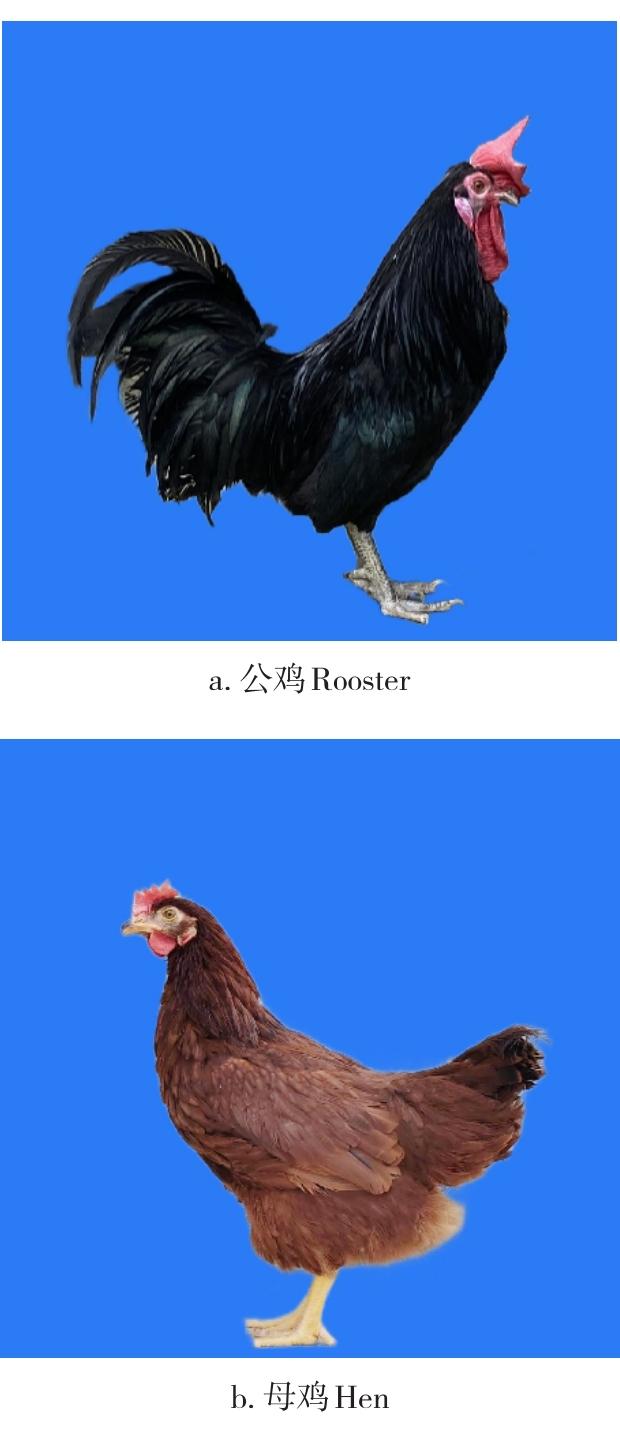
公鸡:成年鸡体型小,结构紧凑;通体羽毛黑色,油光锃亮,尾羽向上内翘;有冠羽,脸部羽毛发达;多为红色倒冠单冠,偶有玫瑰冠;喙黑色;耳叶红色;皮肤白色;胫细短,黑色或青色,多为五趾,偶有四趾。雏鸡羽毛黑色,腹部少量灰色羽;快羽。具体见图2a
母鸡:成年鸡体型中等,体态丰满,体躯呈长方形;全身羽毛深红色,尾羽黑色;头中等大;红色单冠,冠齿6~8个;喙黄褐色,脸部和肉髯鲜红色;耳叶红色;皮肤黄色;胫、趾黄色,四趾。雏鸡羽毛棕褐色;慢羽。具体见图2b
图2 父母代鸡

注:图片源自江苏北农大农牧科技有限公司父母代种鸡场。

Fig. 2 Parent stock

Note: The picture is from Jiangsu Beinongda Agriculture and Animal Husbandry Technology Co., Ltd. parent stock farm.

2.1.2 商品代鸡

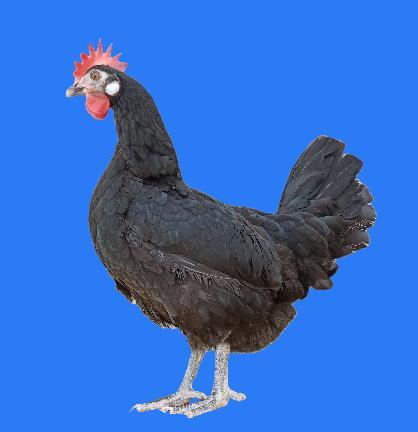
成年鸡体型较小,结构紧凑;全身羽毛黑色,部分个体颈羽有金色羽毛;部分个体有冠羽;冠较小,多为红色单冠,偶有玫瑰冠;喙黑色;肉髯、耳叶红色;皮肤白色;胫较短,黑色或青色,多为五趾,偶有四趾;蛋壳光亮、粉色。雏鸡羽毛黑色,少部分腹羽黄色,快羽。具体见图3
图3 商品代鸡

注:图片源自东台鱼米之乡农产品有限公司商品代鸡场。

Fig. 3 Commercial hen

Note: The picture comes from Dongtai Fish Rice Township Agricultural Products Co., Ltd. commercial chicken farm.

2.2 选育进展

2.2.1 终端父本H系

经选择,H系的黑羽率由88.3%提高到100%,青脚率由98.5%提高到100%,快羽率由97.8%提高到100%,鸡群目标外貌一致且遗传稳定。6周龄公鸡体重增加了62.7 g,母鸡体重增加了53.0 g;18周龄公鸡体重增加了129.5 g,母鸡体重增加了115.7 g;43周龄公鸡体重增加了139.7 g,母鸡体重增加了105.7 g;公母鸡各测定周龄体重整齐度明显提高。开产日龄提早了5.4 d,43周产蛋数提高了12.8个;66周产蛋数提高了14.1个;纯系继代留种14 d左右,受精率提高4.22%,受精蛋孵化率稳定在89%左右。43周龄蛋壳强度共增加了0.27 kg/cm2,蛋壳光泽度增加了1.21,蛋黄比率维持在34%左右,蛋重维持在43 g左右,哈氏单位不低于75.0。

2.2.2 第一父本A系

A系纯系鸡群0世代出雏时慢羽率为99.5%,在采用羽速测交试验和结合个体表型选择后,纯繁后代的慢羽率提升到了一世代的99.9%,并在二世代提升至100%。6周龄公鸡体重共增加了36.9 g,母鸡体重共增加了26.5 g;18周龄公鸡体重增加了62.2 g,母鸡体重增加了54.6 g;43周龄公鸡体重增加了41.8 g,母鸡体重增加了29.2 g;公母鸡各测定周龄体重整齐度相对稳定。开产日龄提早了2.3 d,43周产蛋数提高了7.5个;66周产蛋数提高了4.8个;留种14 d左右,群体受精率和受精蛋孵化率均稳定在90%左右。43周龄蛋壳强度增加了0.19 kg/cm2,蛋重减少了1.8 g,蛋形指数基本维持在1.31,蛋黄比率维持在27.5%左右,哈氏单位维持在78左右。

2.2.3 母本K系

经选择,K系世代间6周龄公鸡体重增加了65.7 g,母鸡体重增加了45.1 g;18周龄公鸡体重增加了152.5 g,母鸡体重增加了69.6 g;43周龄公鸡体重增加了137.9 g,母鸡体重增加了94.4 g;公母鸡各测定周龄体重整齐度相对稳定。开产日龄提早了4.1 d,43周产蛋数提高了3.6个;66周产蛋数提高了5.7个;留种14 d左右,群体受精率和受精蛋孵化率均稳定在90%左右。近5个世代43周龄蛋重减少了2.1 g,蛋壳强度维持在3.8 kg/cm2,蛋壳颜色L值降低了2.4,蛋黄比率维持在27.5%左右,哈氏单位维持在79左右。

2.3 疫病净化

由于A、K系鸡群引种自北京中农榜样蛋鸡育种有限责任公司,鸡群“两白”整体净化水平较好;而H系虽为江苏地区的地方素材,但在开展配套系培育时已经过几个世代的“两白”净化,其阳性率也较低。通过检测和净化,H系的禽白血病抗体阳性率从零世代的0.36%降至五世代的0.01%,A、K系分别从0世代的0.11%、0.07%降至5世代的全阴性。H、A、K系的鸡白痢沙门氏菌抗体阳性率分别从0世代的0.25%、0.07%、0.11%降至5世代的全阴性,各阶段成活率明显提高。

2.4 配套系生产性能

表2可知,农大6号蛋鸡配套系父母代种鸡整体生产性能优良。0~18周龄育雏育成期成活率为97%,19~72周龄产蛋期成活率超过94%;鸡群于143~150日龄达到50%产蛋率,19~66周龄入舍鸡产蛋数276~286个,产蛋总重17.8~18.7 kg,产蛋期料蛋比为2.15∶1,饲料利用效率较高。同时,该配套系种用性能表现稳定,种蛋受精率94%~97%,入孵蛋孵化率不低于87%,可满足规模化制种需求。由表3可知,商品代蛋鸡育雏育成期成活率达98%以上,开产整齐,146~148日龄达到50%产蛋率;19~72周龄入舍鸡产蛋数282.7~284.7个,平均蛋重50.3 g,产蛋期成活率95.9%~96.1%,料蛋比(2.28~2.32)∶1。综合来看,该配套系兼具产蛋性能高、饲料消耗低、蛋品质良好等优势,具备较高的生产应用与推广价值。
表2 父母代种鸡主要生产性能指标

Table 2 Main production performance indexes of parent stock farm

项目Items 数据Data
育雏育成期成活率Survival rate during the hatching period/% 97
产蛋期只鸡日耗料(19~72周龄)Daily feed consumption of chickens during egg laying period (19-72 weeks)/g 115
育雏育成期(0~18周龄)只鸡累计耗料Accumulated feed consumption of chicks during the incubation period (0-18 weeks)/kg 6.7
成年体重(43周龄)Adult body weight (43 weeks)/kg 1.7
达50%产蛋率日龄Age at 50% egg production rate/d 143~150
入舍鸡产蛋数(19~66周龄)Egg production of housed chickens (19-66 weeks)/个 276~286
饲养日产蛋数(19~66周龄)Daily egg production (19-66 weeks)/个 281~295
产蛋总重(19~66周龄)Total egg production weight (19-66 weeks)/kg 17.8~18.7
平均蛋重(19~66周龄)Average egg weight (19-66 weeks)/g 60.5~62.5
43周龄蛋壳强度43 week eggshell strength/(kg•cm-2) 4.0
产蛋期成活率(18~66周龄)Survival rate during egg laying period (18-66 weeks)/% >94
产蛋期料蛋比(18~66周龄)Egg feed ratio during egg laying period (18-66 weeks) 2.15:1
66周龄体重Weight at 66 weeks of age/kg 1.9~2.2
合格种蛋数(25~66周龄)Number of qualified eggs (25-66 weeks)/个 230~240
受精率(25~66周龄)Fertilization rate (25-66 weeks)/% 94~97
入孵蛋孵化率(25~66周龄)Hatching rate of eggs (25-66 weeks)/% ≥87

数据来源:江苏北农大农牧科技有限公司父母代场2021年5月至2022年3月统计数据。

Data source: Statistical data from the parent stock farm of Jiangsu Beinongda Agriculture and Animal Husbandry Technology Co., Ltd. from May 2021 to March 2022.

表3 商品代鸡主要生产性能指标

Table 3 Main production performance indexes of commercial hen

项目Items 性能测定数据Performance measurement data 中间试验数据Intermediate experimental data
育雏育成期(0~18周龄)成活率Survival rate of chicks during the incubation period (0-18 weeks)/% 98.2 98
产蛋期(19~72周龄)平均只鸡日耗料The average daily feed consumption of each chicken during the egg laying period (19-22 weeks)/g 88 89
成年(43周龄)体重Adult (43 weeks) Body weight/kg 1.54 1.52
达50%产蛋率日龄Age at 50% egg production rate /d 146 148
入舍鸡产蛋数(19~72周龄)Egg production of housed chickens (19-72 weeks)/个 284.7 282.7
饲养日产蛋数(19~72周龄)Daily egg production (19-72 weeks)/个 288.5 285.7
平均蛋重(19~72周龄)Average egg weight (19-72 weeks)/g 50.3 50.3
产蛋总重(19~72周龄)Total egg production weight (19-72 weeks)/kg 14.51 14.42
43周龄蛋壳强度43 week eggshell strength/(kg•cm-2) 4.51 4.08
产蛋期成活率(19~72周龄)Survival rate during egg laying period (19-72 weeks)/% 96.1 95.9
料蛋比Ratio of feed to egg 2.28:1 2.32:1
72周龄体重Weight at 72 weeks of age/kg 1.65 1.60

注:性能测定数据来源于2022年9月19日农业农村部家禽品质监督检验测试中心(扬州)对该品种性能测定的结果。

Note: The performance testing data is sourced from the performance testing results of this variety conducted by the Poultry Quality Supervision and Inspection Testing Center (Yangzhou) of the Ministry of Agriculture and Rural Affairs on September 19, 2022.

3 讨论

3.1 农大6号蛋鸡配套系的特性

“农大6号”蛋鸡配套系通过利用小体型黑羽快羽地方鸡品系的优质特点,与洛岛红鸡配套后可以形成“两高一低”市场定位的高产优质特色蛋鸡配套系。“两高”为鸡蛋和淘汰鸡的“双高端”市场,即鸡蛋为市场价格较高的小粉蛋,淘汰鸡为残值较高的青脚黑羽鸡(商品鸡鸡蛋和鸡肉分别通过了“名特优新”产品认证);“一低”指的是饲养成本低,商品鸡体型小、青年鸡育成成本低,产蛋期饲料消耗低。在饲料价格日益上涨的情况下,满足了养殖户对降低成本和提高鸡蛋、淘汰鸡收益的三重要求。
农大6号蛋鸡配套系与当前的主要高产小粉蛋鸡种(农大5号)相比,鸡蛋蛋壳强度更高、淘汰鸡残值更高(黑羽青脚)[9];与当前主要的黑羽青脚特色蛋鸡品种相比,养殖成本更低、蛋壳强度更大[10-11]。因此,“农大6号”蛋鸡配套系综合竞争优势明显,具有良好的推广应用前景。

3.2 未来发展方向

未来,“农大6号”在持续选择和提升产蛋数(尤其是后期产蛋数)、鸡蛋外观品质、饲料转化率等性能的同时,重点关注鸡蛋内部品质、鸡肉品质的测定和选育,进一步打造优质高产的特色,增强其竞争力和市场占有率。应用新的育种方法和技术,建立合理有效的性状评估体系,提高遗传评估的准确性,提升选择的精确性,加快遗传进展。

4 结语

随着人们生活水平的提高,对鸡蛋和鸡肉的从量到质的消费需求转变也愈加明显。市场调查发现,当前鸡蛋高端市场对鸡蛋的需求为蛋壳强度高(便于运输)、蛋重适中(50 g左右)、蛋黄比率较高、蛋壳外观品相好(颜色鲜亮)。本配套系以此为育种目标,使得最终产品很好地满足了这些需求,同时注重对商品鸡外观性状的选育,使其淘汰鸡残值增加。总的来看,“农大6号”蛋鸡配套系具有鸡蛋品质好、淘汰鸡价值高的特点(商品鸡鸡蛋和鸡肉分别通过了“名特优新”产品认证),在符合消费市场趋势的同时,也满足了蛋鸡养殖户对特色蛋鸡品种的需求。因此,“农大6号”蛋鸡配套系综合竞争优势明显,具有良好的推广应用前景。
[1]
李玲玥, 熊航, 贺娟. 2020年我国鸡蛋消费选择偏好调查统计数据集[J]. 农业大数据学报, 2023, 5(4): 130-137.

LI L Y, XIONG H, HE J. Statistical dataset of egg consumption preference survey in China in 2020[J]. Journal of Agricultural Big Data, 2023, 5(4): 130-137.

[2]
于爱芝, 孙从佼, 杨敏, 等. 2025年蛋鸡产业发展情况、未来发展趋势及建议[J]. 中国畜牧杂志, 2026, 62(3): 345-351.

YU A Z, SUN C J, YANG M, et al. Development situation, future development trend and suggestions of laying hens industry in 2025[J]. Chinese Journal of Animal Science, 2026, 62(3): 345-351.

[3]
郭东浩, 马卓, 浦华, 等. 2024年禽肉产业发展形势及2025年展望[J]. 中国畜禽种业, 2025, 21(7): 90-96.

GUO D H, MA Z, PU H, et al. The development situation of the poultry industry in 2024 and outlook for 2025[J]. The Chinese Livestock and Poultry Breeding, 2025, 21(7): 90-96.

[4]
王克华. 地方特色蛋鸡的开发与利用[J]. 中国家禽, 2017, 39(7): 1-5.

WANG K H. Development and utilization of local characteristic laying hens[J]. China Poultry, 2017, 39(7): 1-5.

[5]
孙从佼, 杨宁. 中国蛋鸡种业发展概况与未来发展趋势[J]. 中国禽业导刊, 2022, 39(6): 5-8.

SUN C J, YANG N. Overview of the development and future development trend of layer breeding industry in China[J]. Guide to Chinese Poultry, 2022, 39(6): 5-8.

[6]
王星果, 李永峰, 窦套存, 等. 中国鸡种质资源挖掘与创新利用[J]. 中国畜禽种业, 2023, 19(12): 140-145.

WANG X G, LI Y F, DOU T C, et al. Mining and innovative utilization of chicken germplasm resources in China[J]. The Chinese Livestock and Poultry Breeding, 2023, 19(12): 140-145.

[7]
王星果, 窦套存, 郭军, 等. 苏禽6号蛋鸡配套系选育研究[J]. 中国畜禽种业, 2024, 20(12): 62-68.

WANG X G, DOU T C, GUO J, et al. Breeding of suqin No.6 layer[J]. The Chinese Livestock and Poultry Breeding, 2024, 20(12): 62-68.

[8]
孙研研, 江琳琳, 石雷, 等. 北京油鸡及相关品系和配套系鸡蛋的蛋品质比较[J]. 中国家禽, 2019, 41(22): 57-60.

SUN Y Y, JIANG L L, SHI L, et al. Comparison of egg quality of Beijing you chicken and related lines and commercial breeds[J]. China Poultry, 2019, 41(22): 57-60.

[9]
宁中华. “农大5号”高效小型蛋鸡配套系选育与应用[Z]. 北京市: 中国农业大学, 2019-12-01.

NING Z H. Breeding and application of "Nongda No.5" efficient Mini layer mating line[Z]. Beijing. China Agricultural University, 2019-12-01.

[10]
陆军, 严华祥, 夏兆鑫, 等. “新杨黑”蛋鸡配套系商品代中试生产性能调查[J]. 国外畜牧学(猪与禽), 2014, 34(12): 45-47.

LU J, YAN H X, XIA Z X, et al. Investigation on production performance of “Xinyang Black” laying hens in commercial pilot plant[J]. Animal Science Abroad-Pigs and Poultry, 2014, 34(12): 45-47.

[11]
曲亮, 李清逸, 窦套存, 等. 神丹6号绿壳蛋鸡选育研究[J]. 畜牧与兽医, 2021, 53(12): 8-11.

QU L, LI Q Y, DOU T C, et al. Breeding of Shendan No.6 green shell layers[J]. Animal Husbandry & Veterinary Medicine, 2021, 53(12): 8-11.

Outlines

/