


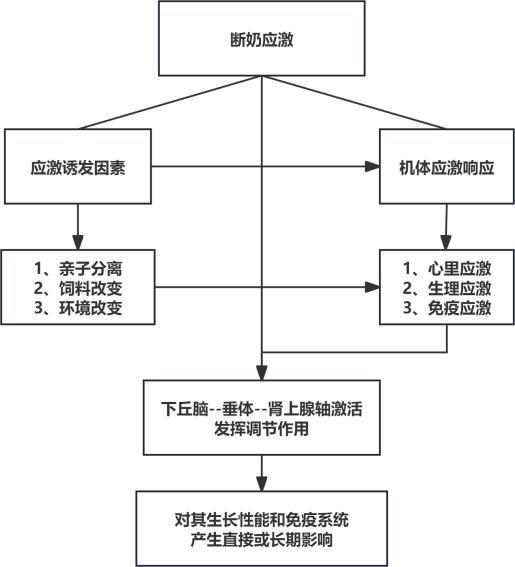
在反刍动物养殖业向集约化、规模化方向快速发展的背景下,早期断奶技术因能有效缩短繁殖周期、降低饲养成本而被广泛采用。然而,幼龄反刍动物在断奶阶段面临营养结构突变、环境重组等多重压力,极易引发强烈的断奶应激,会导致反刍动物神经内分泌应激轴激活、能量与物质代谢紊乱、瘤胃发育与消化功能紊乱、肠道屏障功能受损、免疫系统抑制、氧化应激增强等风险,进而造成采食下降、消化不良、腹泻、生长受阻和抗病力降低,进而影响其生产效率[1]。在传统养殖方面,人们通过在饲料中添加抗生素来缓解应激并防控继发感染,但长期大量使用会导致细菌耐药性加剧,同时,随着国家全面禁止饲料中添加抗生素,抗生素替代物的研发与应用已成为当前研究热点。其中,中草药因其抗氧化、抗炎、抗菌及调节瘤胃发酵的特性,以及益生菌在改善肠道菌群、促进免疫发育与提升生长性能方面的优势,受到广泛关注[2-3]。本文围绕反刍动物断奶应激的发生机制与影响因素,重点综述了替代药物治疗、营养调控及饲养管理优化等的缓解作用及机理,旨在为反刍动物断奶期的营养调控与健康养殖提供理论参考,并为实际生产中的预防与干预策略提供实践参考。
1 断奶应激的影响因素


1.1 断奶时间与方式
1.2 日粮因素
1.3 环境因素
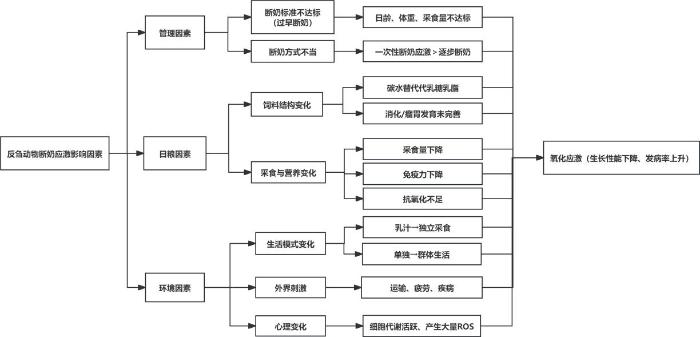
外界环境突变是断奶应激的重要诱因。断奶期间,幼龄反刍动物常面临圈舍迁移、温湿度波动、饲养密度过高等物理性应激,以及群体重组、等级争斗等社会性应激。此外,长途运输、免疫接种、换圈驱赶等管理操作也会进一步激活下丘脑-垂体-肾上腺轴,放大应激反应[5]。优化断奶期的环境管理,例如控制饲养密度、减少非必要操作,对缓解断奶应激具有辅助作用。
2 断奶应激对反刍动物产生的影响
2.1 断奶应激对反刍动物生产性能的影响
断奶应激对反刍动物最直观的影响是生产性能下降,具体表现为采食量减少、体重增长停滞乃至负增长,还会延迟后期出栏时间。有研究发现,突然断奶的犊牛在断奶后12 d平均日增重降幅达79.21%,远高于逐步式断奶组的17.82%;45日龄断奶犊牛初期日增重较60日龄断奶组显著降低,虽后期体重差异缩小,但早期生长滞后会影响后期骨骼发育,以至于体尺指标明显不同[10]。断奶过程中饲料发生突发性转变,打破了机体原有的消化代谢稳态,导致采食量显著下降与营养摄入不足,这直接反映为动物体增重迟缓与日增重降低。柴建民等[11]研究表明,20日龄与30日龄断奶的羔羊,在断奶后10 d的营养物质表观消化率均显著低于未断奶对照组,表明断奶应激在断奶初期即对羔羊的生长性能产生了抑制效应。从能量代谢角度,幼龄反刍动物正处于快速发育阶段,机体对能量的需求量大且储备有限。而应激状态下,机体需启动大量能量用于合成应激蛋白、维持体温及代谢补偿,导致本应用于生长发育的能量被消耗。此外,断奶应激诱发的氧化应激反应是加剧生产性能下降的重要因素之一[12]。过量生成的ROS会导致细胞色素P450酶系失活,阻碍维生素D活化,进而降低钙的吸收效率,钙吸收不足会减缓肠道蠕动,最终导致生产性能持续受损[13]。综上,断奶应激导致的生产性能下降是制约反刍动物早期生长发育的关键瓶颈,切实减轻断奶应激对采食、增重及代谢的负面效应,是提升养殖效益的核心环节。
2.2 断奶应激对反刍动物消化道的影响
断奶应激对反刍动物消化道的影响主要体现在消化酶活性抑制与肠道屏障功能破坏等方面[14]。在影响消化酶活性与吸收功能方面,断奶导致幼龄反刍动物消化系统发育滞后,淀粉酶、胰蛋白酶等关键消化酶的分泌量与活性水平均呈下降趋势,直接削弱了胃肠道对营养物质的分解与吸收能力。吕玉铃等[15]研究发现,犊牛在断奶后第3天血清D-木糖含量即较断奶前下降10.78%,第9天仍略低于断奶前水平,而到第15天后则逐渐回升,表明断奶应激可导致犊牛小肠吸收能力暂时下降,但随着犊牛适应与生长,应激反应减轻,肠道吸收功能逐步恢复。在影响肠道屏障功能方面,断奶应激可致胃肠道屏障功能易遭受损伤,导致肠道通透性显著增加。这一病理变化使得肠腔内的细菌及其代谢产物更易穿透黏膜屏障,发生易位并侵入深层组织,进而触发宿主的系统性免疫应答[16]。有研究表明,在断奶前2 d以及断奶后1~2周,犊牛血清中二胺氧化酶(Diamine oxidase, DAO)含量均表现出增加趋势,并在断奶3周后显著增加。DAO活性是反映小肠功能的一项重要指标,血清DAO水平在小肠黏膜绒毛上皮细胞受损时会急剧升高,印证了断奶应激可导致肠道黏膜损伤并引起肠道通透性改变[17]。同时,饲料变化引起的瘤胃发酵模式改变,会导致挥发性脂肪酸生成异常与pH值下降,增加亚急性瘤胃酸中毒的风险,并提升脂多糖等抗原负荷,进一步威胁消化道稳态[18]。断奶应激对消化酶活性、肠道屏障及瘤胃稳态的协同破坏,是诱发幼龄反刍动物消化障碍与肠道疾病的主要病理基础,亟须从营养调控和微生态干预角度构建消化道保护策略。
2.3 断奶应激对反刍动物免疫功能的影响
幼龄反刍动物免疫系统发育不成熟,其适应性免疫尚未完全建立,当动物断奶过程中发生应激时,免疫系统易受到影响。在这一阶段,当遭受细菌侵袭时,机体免疫系统可能出现功能抑制,进而触发炎症级联反应,最终导致腹泻的发生。刘培培[19]研究表明,断奶后犊牦牛外周血白细胞总数显著增多,伴随血红蛋白与红细胞压积升高,提示机体可能处于代偿性炎症状态。皮质醇作为应激核心激素,其浓度在断奶后1~3 d及11~14 d均呈现显著升高趋势;同时,中性粒细胞比例上升、淋巴细胞比例下降,导致中性粒细胞与淋巴细胞比值显著升高[20]。促炎细胞因子(如IL-1β、IL-8、IFN-γ、TNF-α)的基因表达上调,以及急性期蛋白(如触珠蛋白、纤维蛋白原极)浓度的显著升高且持续到断奶2周后,均表明断奶应激触发了强烈的全身性炎症级联反应,增加了组织炎性损伤的风险[21-22]。
母乳是新生反刍动物获取被动免疫的主要来源。断奶导致动物丧失了母乳中丰富的免疫球蛋白、溶菌酶及谷胱甘肽过氧化物酶等关键免疫因子,机体的被动免疫屏障被中断,主动免疫防线尚未完全建立,最终导致整体抵抗力下降,显著增加了呼吸道及消化道疾病的感染风险[1]。断奶应激通过激活下丘脑-垂体-肾上腺轴、诱发全身性炎症反应以及中断被动免疫传递三重机制,严重削弱幼龄反刍动物的免疫防御能力,是导致断奶后疾病高发与死亡率上升的根本诱因,加强断奶期的免疫支持与抗炎管理具有重要意义。
3 断奶应激的缓解措施
3.1 药物治疗
过去,抗生素对幼龄反刍动物断奶应激有较好的治疗效果,如多肽类抗生素杆菌肽锌可提高犊牛日增重和饲料转化率[23],但长期或不当使用抗生素,易导致细菌耐药性问题加剧,对动物健康及食品安全构成潜在威胁。根据农业农村部194号公告,自2020年起饲料中全面禁抗,抗生素不再作为断奶应激的常规缓解手段,天然替抗物质成为主流。目前多采用中药或植物提取物,其基于中(兽)医理论,具有天然、低毒、绿色等优势,可提高生产性能、降低发病率、缓解断奶应激。单一成分中,黄芪及其提取物得到深入研究,现有研究表明,黄芪水提物可提高犊牛瘤胃微生物多样性、纤维分解菌比例,增强免疫与抗氧化能力[24];黄芪甲苷可提高断奶犊牛平均日增重、改善代谢[25]。藤茶、人参、鱼腥草等提取物在仔猪中效果明显,但在反刍动物中需进一步验证[26-27]。
此外,复合中草药效果更显著。由黄芪、当归、党参等熬制的复合饮剂可提高断奶羔羊生长性能、降低腹泻率、增强免疫功能[28-29]。基础日粮中添加复方中草药提取物(黄芪、当归、甘草按2∶1∶1配比)添加量为500 mg/kg,可显著降低犊牛血清皮质醇浓度、血清二胺氧化酶活性、隐窝深度,显著增加十二指肠绒毛高度,可有效缓解犊牛断奶应激反应,改善肠黏膜结构形态和肠道健康[30]。黄芪、杜仲叶、山茱萸复配提取物(添加量1.0~2.0 g/kg)可显著降低羔羊断奶应激,2.0 g/kg效果最佳[31]。此外,日粮中添加丁香酚、肉桂醛可提高断奶犊牛饲料转化率及疫苗抗体反应[32];褐藻来源的岩藻多糖可改善断奶羔羊血清生化指标,提升抗氧化与免疫能力,提高肠道消化酶活性和短链脂肪酸水平,调节肠道菌群结构,减轻黏膜氧化损伤,有效缓解断奶应激[33]。综上,饲喂适量中草药或植物提取物,是缓解幼龄反刍动物断奶应激的安全有效途径。
3.2 营养调控
断奶后幼龄反刍动物的营养需求与哺乳期差异显著,营养调控是缓解断奶应激、保障生长发育的关键技术手段。其核心在于通过科学调配日粮结构、补充功能性营养成分,优化机体营养供给,改善肠道微生态与免疫机能,从而减轻应激反应。
此外,聚焦哺乳期适应期和断奶过渡期关键阶段的营养调控,可有效缓解犊牛断奶应激反应:断奶过渡期需循序渐进调整母乳、代乳料与开食料的比例,杜绝突然停喂母乳。同时,可通过添加益生菌、酶制剂缓解消化紊乱,对应激反应明显的犊牛,可在饮水中补充电解质和葡萄糖以快速补充营养;严格保证饲料质量稳定,杜绝饲喂发霉变质、营养不均衡的饲料,防范消化应激及中毒反应的发生[42]。
综上,幼龄反刍动物断奶期营养调控应以促进瘤胃发育、保障能量供给、维护肠道健康等为核心,通过精粗饲料科学配比、优化能量与蛋白来源、补充功能性添加剂等方式,实现断奶应激的高效缓解。
3.3 管理方法优化
饲养管理优化主要从环境调控、断奶模式与母幼关系三个维度综合施策,多途径降低幼龄反刍动物断奶应激强度。
在断奶模式上,断奶时机选择不当会显著加重应激反应,不利于幼畜的生长发育和健康[45]。结合我国规模化养殖实际,建议幼畜适宜断奶指标为连续3 d采食适量开食料,母乳总饲喂量250~300 kg,体重达到初生重2倍左右,日龄以60日龄为宜[46-47]。为帮助幼畜消化系统提前适应固体饲料,在哺乳期适应期应尽早投喂开食料,为其抗应激能力奠定基础。进入断奶过渡期后,需循序渐进调整母乳、代乳料与开食料的比例。逐步断奶法相较于突然断奶更利于缓解应激[48],可逐步降低母乳饲喂次数与饲喂量,同步逐渐增加固体饲料投喂量,遵循少餐少食的原则,避免营养来源突变引发应激;同时,可通过补充葡萄糖饮水解决幼畜能量不足问题[49],防止因能量匮乏影响机体生长发育,危害其健康。
4 结语
断奶应激会对幼龄反刍动物造成生产性能下降、消化道功能受损及免疫力降低等多方面危害。本文梳理了幼龄反刍动物断奶应激的相关研究,明确其由断奶方式、日粮结构、环境条件等因素协同引发,会导致机体神经内分泌、代谢及免疫紊乱制约养殖业健康发展。针对此,可通过三条路径缓解:一是在禁抗背景下,以中草药及植物提取物替代抗生素;二是优化日粮配比、补充益生菌等实现营养调控;三是稳定饲养环境、采用渐进式断奶等措施优化管理。三者协同作用,可为缓解断奶应激提供理论与实践支撑。
当前研究仍有不足,未来需深化断奶应激分子机制研究,明确调控网络;优化抗生素替代物研发,明确作用靶点与最佳剂量;完善个性化精准饲养管理标准;推动实验室成果转化,开发低成本综合缓解方案,实现断奶应激精准防控,助力反刍动物养殖业绿色高效发展。