中国畜禽种业 ›› 2026, Vol. 22 ›› Issue (6): 72-80.doi: 10.19543/j.cnki.1673-4556.20260602.007cstr: 32418.14.j.cnki.1673-4556.20260602.007
任端阳( ), 李文霞, 王馨培, 王曦()
Duanyang Ren(), Wenxia Li, Xinpei Wang, Xi Wang()
摘要:
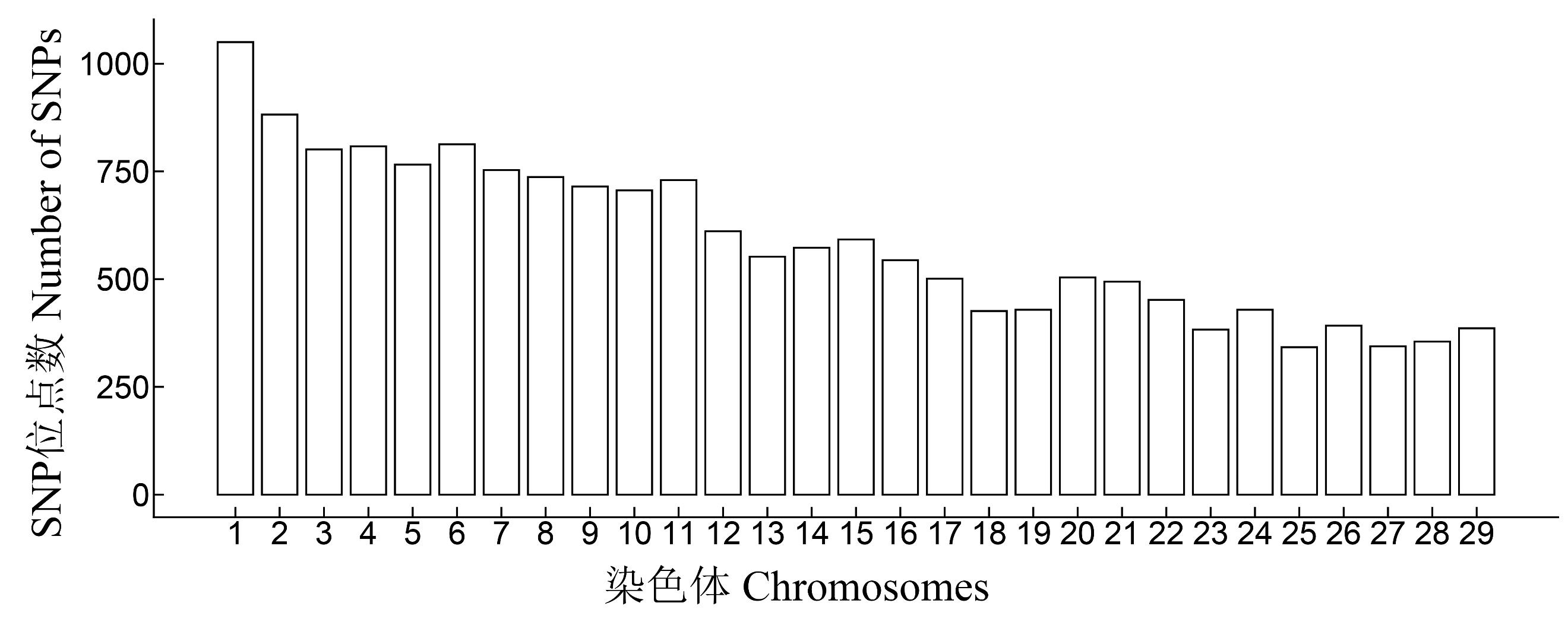
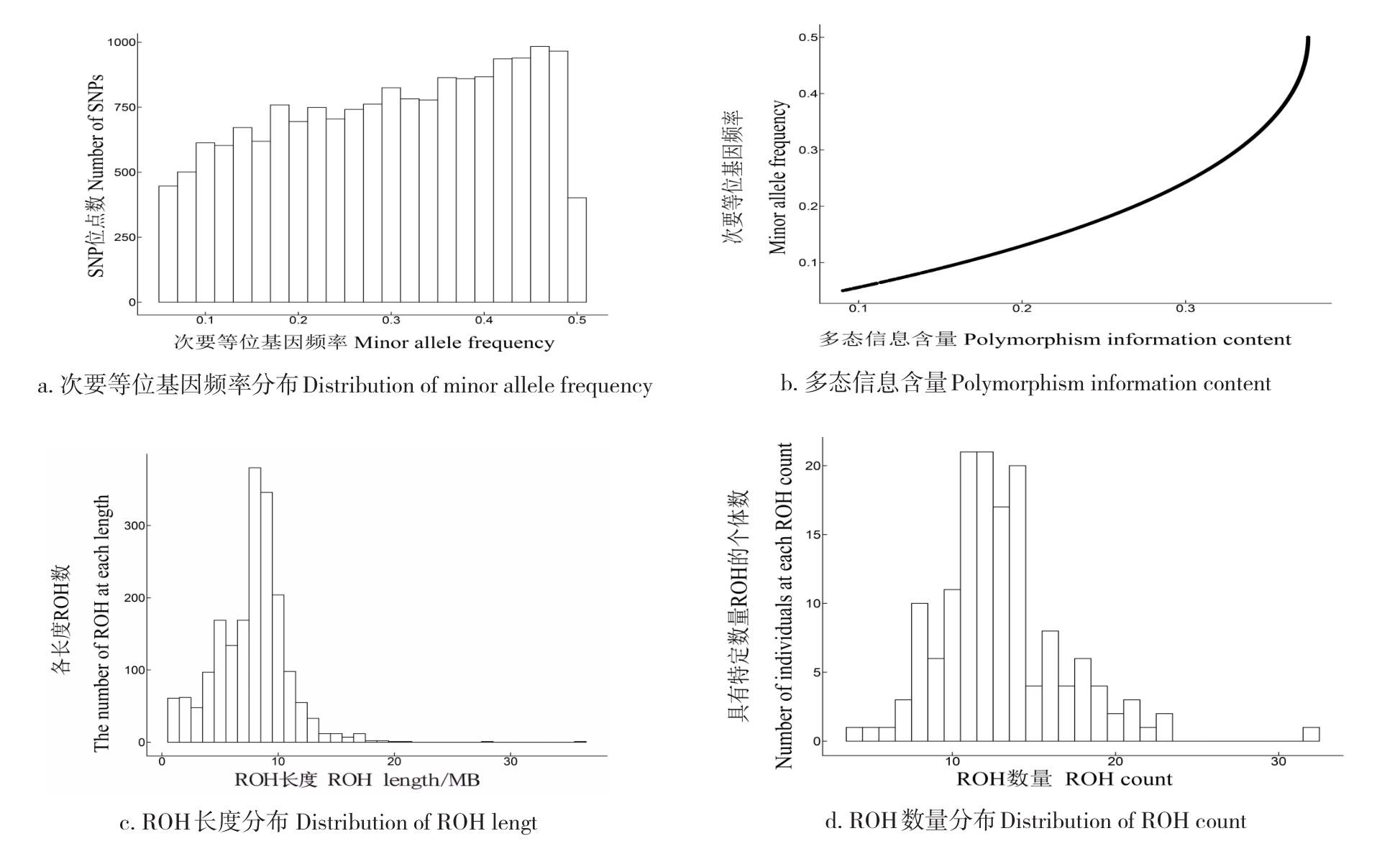
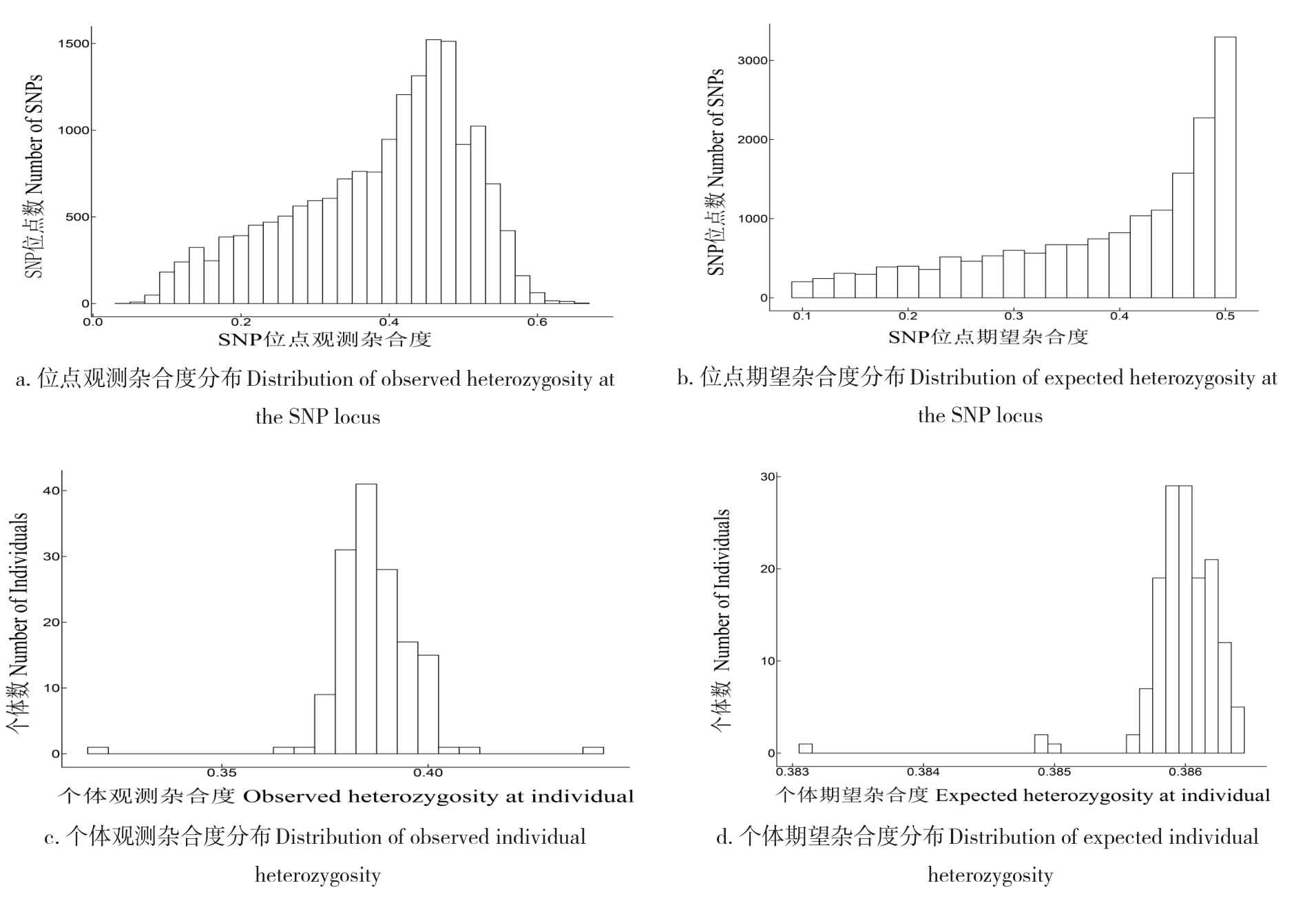
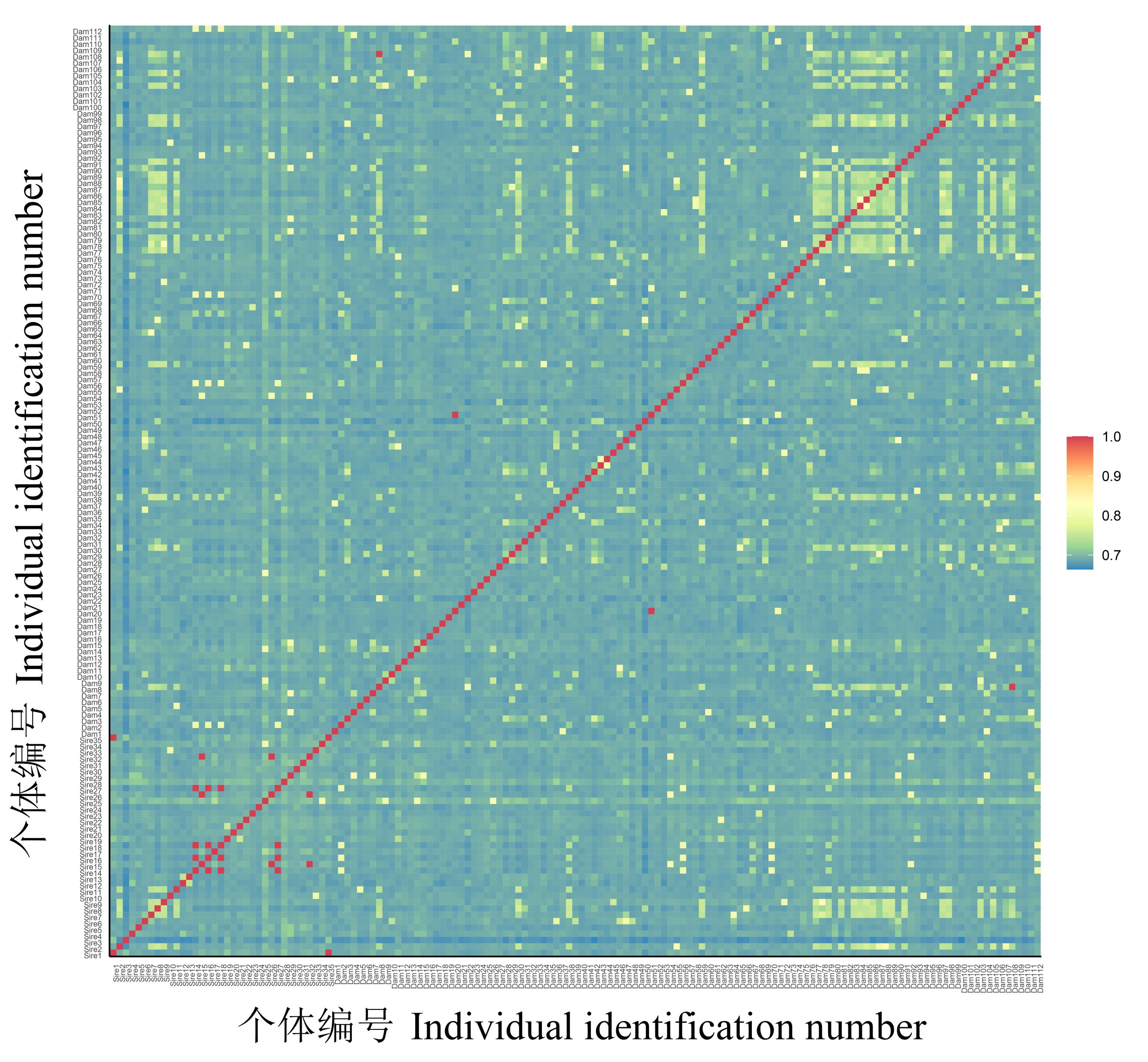
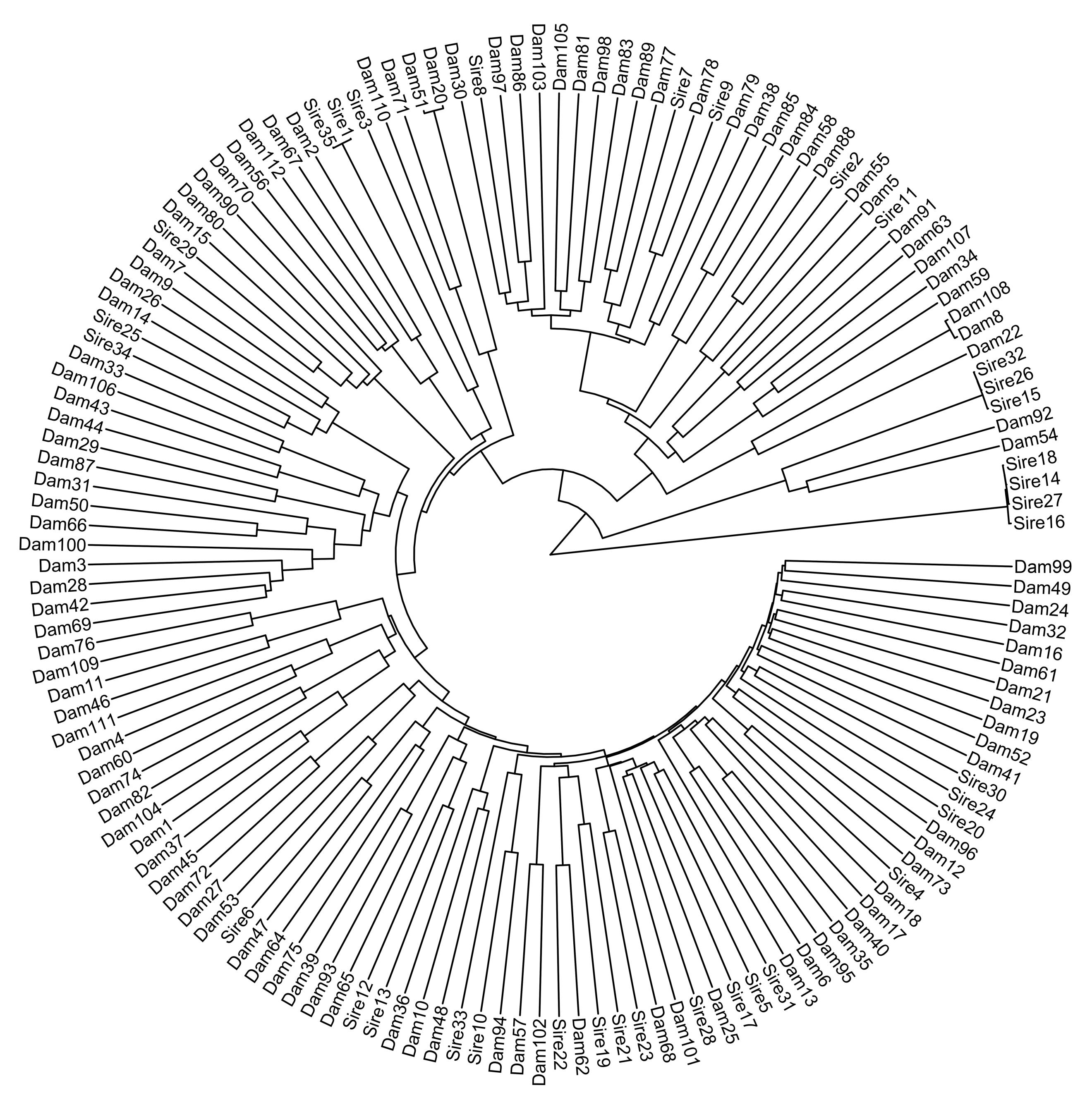
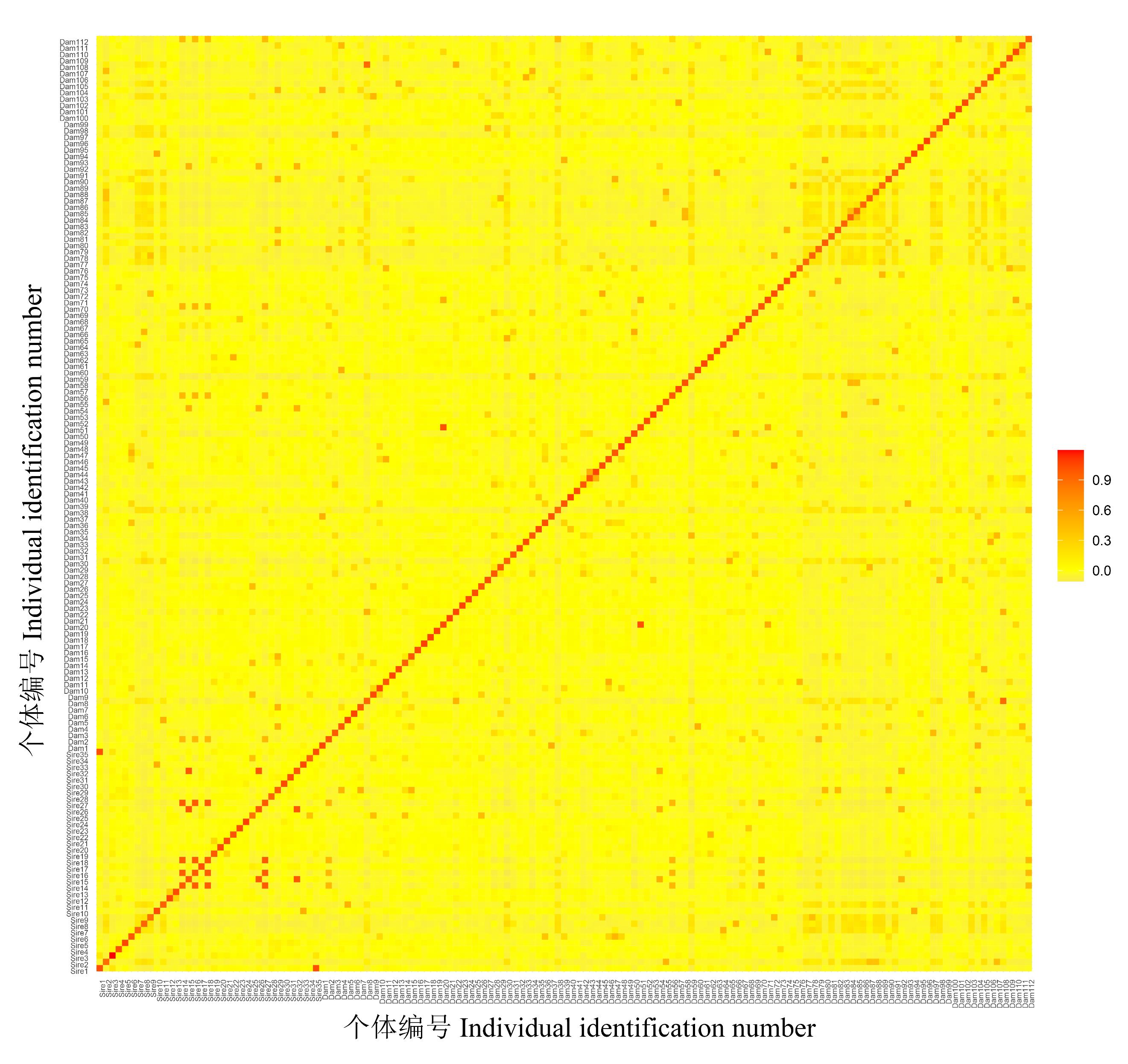
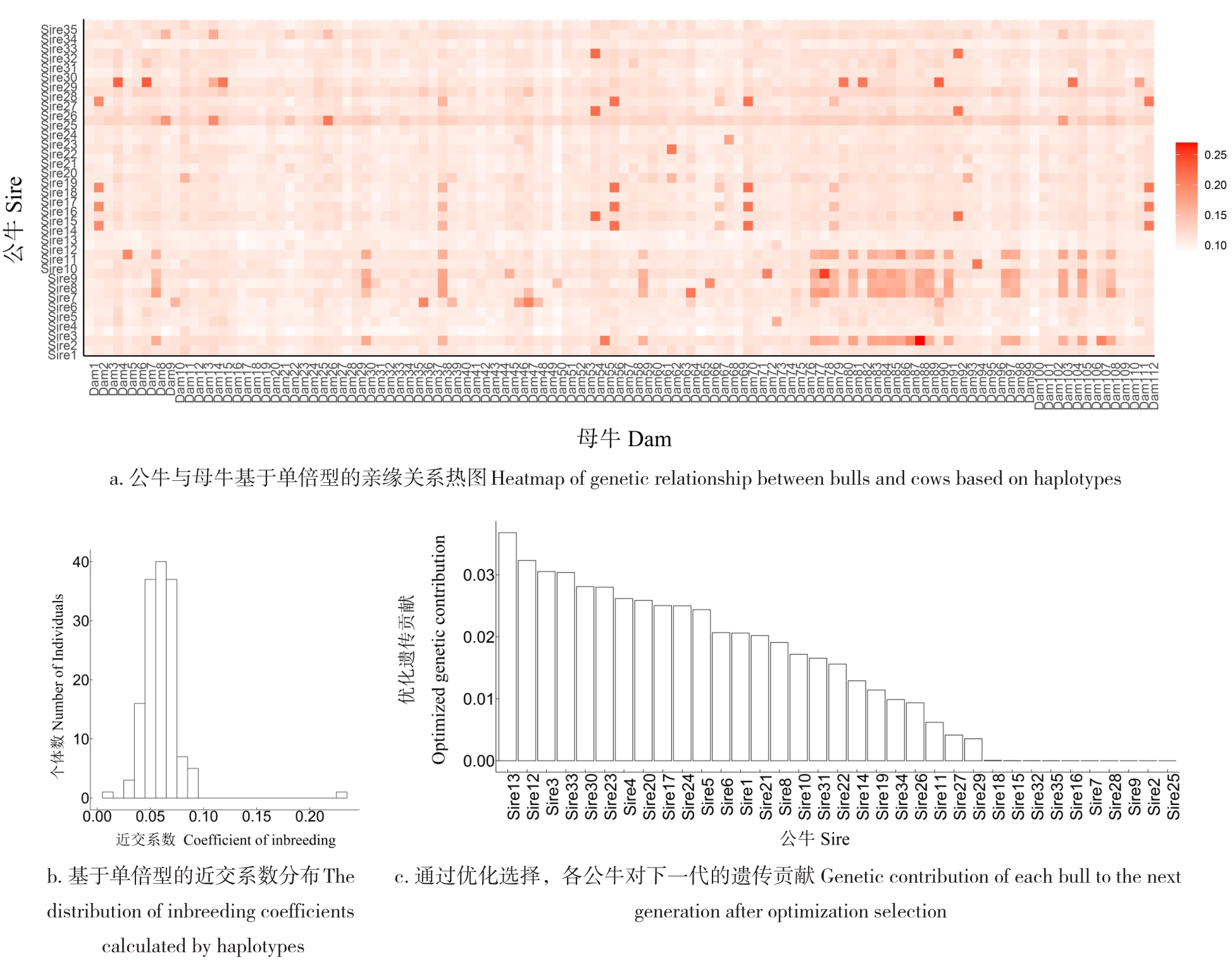
目的 本研究旨在分析晋南牛保种群的遗传多样性与群体遗传结构,评估其个体间的基因组亲缘关系并进行分子选配,从而更好地保护与利用晋南牛遗传资源。 方法 试验使用牛20 K单核苷酸多态性(Single nucleotide polymorphism,SNP)芯片对161头晋南牛(46头公牛,115头母牛)进行基因分型,分型结果经质控后用于保种群遗传多样性、群体遗传结构分析及个体间基因组亲缘关系计算,优化公牛遗传贡献以最小化下一代的近交系数,同时维持群体遗传多样性。 结果 结果表明:质控后保留17070个SNP位点,个体平均观测杂合度为0.387,平均期望杂合度为0.386,SNP多态信息含量均值为0.305。纯合性片段检测共发现1907个ROH片段,平均长度为7.754 Mb,个体平均携带12.973个ROH片段,基于ROH计算的近交系数均值为0.060。依据家系进化树,该晋南牛群体可清晰划分为8个以上家系。该群体遗传多样性为0.888。基于全基因组SNP位点构建关系矩阵,个体间亲缘关系为-0.107~0.521,而将SNP位点划分为单倍型片段构建关系矩阵,个体间的亲缘关系为0~0.269,均值为0.112。通过优化公牛的遗传贡献最小化下一代的近交系数,前10头公牛的遗传贡献占全部公牛遗传贡献的57.639%。 结论 综上,晋南牛保种群遗传多样性丰富、近交水平较低;基于单倍型计算的亲缘关系,可为晋南牛科学选配及保种利用提供参考。
中图分类号:
| [1] | 蒋洪茂. 我国黄牛肉用性能研究报告(下)[J]. 黄牛杂志, 1996, 22(4): 28-31. |
| JIANG H M. Research report on the performance of Chinese yellow beef (Ⅱ)[J]. China Cattle Science, 1996, 22(4): 28-31. | |
| [2] | 呙明鹏, 孟源, 王宏浩, 等. 晋南牛不同生长阶段体重和体尺性状遗传参数估计[J]. 畜牧兽医学报, 2023, 54(4): 1452-1464. |
| GUO M P, MENG Y, WANG H H, et al. Estimation of genetic parameters of body weight and body size traits in Jinnan cattle at different growth stages[J]. Acta Veterinaria et Zootechnica Sinica, 2023, 54(4): 1452-1464. | |
| [3] | 钟梓奇, 谢鑫峰, 王子轶, 等. 分子标记在畜禽保种中应用的研究进展[J]. 中国畜禽种业, 2024, 20(3): 3-10. |
| ZHONG Z Q, XIE X F, WANG Z Y, et al. Research progress on application of molecular markers in livestock and poultry conservation[J]. The Chinese Livestock and Poultry Breeding, 2024, 20(3): 3-10. | |
| [4] | 王曦, 张元庆, 贺东昌, 等. 晋南牛与部分地方黄牛之间遗传多样性分析[J]. 畜牧兽医学报, 2015, 46(6): 911-923. |
| WANG X, ZHANG Y Q, HE D C, et al. Analyses of genetic diversity among Jinnan cattle and three other Chinese indigenous cattle breeds[J]. Acta Veterinaria et Zootechnica Sinica, 2015, 46(6): 911-923. | |
| [5] | 艾尼卡尔·艾尔肯, 马凯伦, 王丹, 等. 新疆褐牛体型性状基因组育种值与表型值相关性案例分析[J]. 中国畜牧杂志 2026:1-12. |
| AINIKAER·A E K, MA K L, WANG D,et al. Correlation analysis between genomic estimated breeding values and phenotypic values of body conformation traits in Xinjiang brown cattle[J]. Chinese Journal of Animal Science, 2026: 1-12. | |
| [6] | 尚燕燕. 基于基因组信息制定新疆褐牛选配方案[D]. 乌鲁木齐: 新疆农业大学, 2025. |
| SHANG Y Y. Developing a Mating Scheme for Xinjiang Brown Cattle Based on Genomic Information[D]. Urumqi: Xinjiang Agricultural University, 2025. | |
| [7] | 刘晨龙, 卢丹, 周泉勇, 等. 利用高密度SNP芯片分析杭猪的群体遗传结构[J]. 畜牧兽医学报, 2022, 53(8): 2502-2513. |
| LIU C L, LU D, ZHOU Q Y, et al. Analysis of population genetic structure of Hang pigs by high density SNP chip[J]. Acta Veterinaria et Zootechnica Sinica, 2022, 53(8): 2502-2513. | |
| [8] | 阳文攀, 黄畅, 李细林, 等. 东乡花猪遗传多样性与分子选配分析[J]. 中国畜牧杂志, 2025, 61(8): 124-129. |
| YANG W P, HUANG C, LI X L, et al. Genetic Diversity and Molecular Mating Analysis of Dongxiang Spotted Pigs [J]. Chinese Journal of Animal Science, 2025, 61(8): 124-129. | |
| [9] | 范广轩, 王天骄, 董依萌, 等. 基于SNP位点的吉林梅花鹿分子系谱构建及群体遗传结构分析[J]. 畜牧兽医学报, 2024, 55(9): 3925-3935. |
| FAN G X, WANG T J, DONG Y M, et al. Molecular genealogy construction and population genetic structure analysis of Jilin Sika deer based on SNP loci[J]. Acta Veterinaria et Zootechnica Sinica, 2024, 55(9): 3925-3935. | |
| [10] | 马龙刚, 刘楠, 尼玛群宗, 等. 基于SNP芯片信息分析西藏四个本地牛种的血统组成[J]. 畜牧兽医学报, 2024, 55(10): 4377-4390. |
| MA L G, LIU N, NI M, et al. Study on the genetic composition of four local Tibetan cattle breeds based on SNP chip analysis[J]. Acta Veterinaria et Zootechnica Sinica, 2024, 55(10): 4377-4390. | |
| [11] | 蔡保, 郭宪. 中国黄牛全基因组测序研究进展[J]. 中国畜禽种业, 2024, 20(10): 17-30. |
| CAI B, GUO X. Research progress on whole genome sequencing of Chinese cattle[J]. The Chinese Livestock and Poultry Breeding, 2024, 20(10): 17-30. | |
| [12] | 童雄, 罗威, 闵力, 等. 基于全基因组SNPs分析陆丰黄牛和雷琼牛的群体结构与遗传多样性特征[J]. 中国农业科学, 2023, 56(14):2798–2811. |
| TONG X, LUO W, MIN L, et al. Population structure and genetic diversity of Lufeng cattle and Leiqiong cattle based on genome-wide SNPs[J]. Scientia Agricultura Sinica, 2023,56(14):2798-2811. | |
| [13] | 刘爽. 基于基因组测序解析固原黄牛关键性状的遗传特征[D]. 银川: 宁夏大学, 2025. |
| LIU S. Genetic characterization of key traits in Guyuan cattle based on genome sequencing[D]. Yinchuan: Ningxia University, 2025. | |
| [14] | 李倩, 金海, 张刘, 等. 平凉红牛和西门塔尔牛基因组选择特征分析[J/OL]. 中国畜牧兽医, 2026: 1-12. (2026-04-23). . |
| LI Q, JIN H, ZHANG L, et al. Genomic selection signal characteristics analysis of Pingliang red and Simmental cattle[J/OL]. China Animal Husbandry & Veterinary Medicine, 2026: 1-12. (2026-04-23). . | |
| [15] | 王宏浩, 任小康, 张毅, 等. 基因芯片技术在晋南牛种公牛选育中的应用[J]. 畜牧兽医学报 2021, 52(10):2803-2813. |
| WANG H H, REN X K, ZHANG Y, et al. Application of gene chip technology in Jinnan bull breeding[J]. Acta Veterinaria et Zootechnica Sinica, 2021, 52(10):2803-2813. | |
| [16] | 戎艳花, 贾雪纯, 李鹏飞, 等. 晋南牛遗传结构特征及选择信号分析[J]. 中国畜牧兽医, 2024, 51(1):160–171. |
| RONG Y H, JIA X C, LI P F, et al. Analysis of genetic structure characteristics and selection signal in Jinnan cattle[J]. China Animal Husbandry & Veterinary Medicine, 2024, 51(1): 160-171. | |
| [17] | PURCELL S, NEALE B, TODD-BROWN K, et al. PLINK: a tool set for whole-genome association and population-based linkage analyses[J]. American Journal of Human Genetics, 2007, 81(3): 559-575. |
| [18] | PARADIS E, SCHLIEP K. Ape 5.0: an environment for modern phylogenetics and evolutionary analyses in R[J]. Bioinformatics, 2019, 35(3): 526-528. |
| [19] | YANG J, LEE S H, GODDARD M E, et al. GCTA: a tool for genome-wide complex trait analysis[J]. American Journal of Human Genetics, 2011, 88(1): 76-82. |
| [20] | YANG J, BENYAMIN B, MCEVOY B P, et al. Common SNPs explain a large proportion of the heritability for human height[J]. Nature Genetics, 2010, 42(7): 565-569. |
| [21] | WELLMANN R. Optimum contribution selection for animal breeding and conservation: the R package optiSel[J]. BMC Bioinformatics, 2019, 20(1): 25. |
| [22] | CENDRON F, LEDESMA-RODRÍGUEZ A, MASTRANGELO S, et al. Genome-wide analysis of the Siboney de Cuba cattle breed: genetic characterization and framing with cattle breeds worldwide[J]. Frontiers in Genetics, 2024, 15: 1302580. |
| [23] | 马钧, 樊安平, 王武生, 等. 全基因组重测序解析秦川牛保种群遗传多样性和遗传结构[J]. 遗传, 2023, 45(7): 602-616. |
| MA J, FAN A P, WANG W S, et al. Analysis of genetic diversity and genetic structure of Qinchuan cattle conservation population using whole-genome resequencing[J]. Hereditas, 2023, 45(7): 602-616. | |
| [24] | 刘思宇, 张曼, 张岩, 等. 基于重测序数据评估南阳牛保种效果[J]. 畜牧兽医学报, 2024, 55(9): 3876-3886. |
| LIU S Y, ZHANG M, ZHANG Y, et al. Evaluation of the conservation effect in Nanyang cattle based on resequencing data[J]. Acta Veterinaria et Zootechnica Sinica, 2024, 55(9): 3876-3886. | |
| [25] | 张岩, 魏稚彤, 虎业浩, 等. 基于全基因组重测序评估郏县红牛保种群遗传多样性与群体结构[J]. 中国畜牧兽医, 2024, 51(7): 2933-2942. |
| ZHANG Y, WEI Z T, HU Y H, et al. Genetic diversity and population structure analysis of Jiaxian red cattle based on whole genome sequencing[J]. China Animal Husbandry & Veterinary Medicine, 2024, 51(7): 2933-2942. | |
| [26] | PURFIELD D C, BERRY D P, MCPARLAND S, et al. Runs of homozygosity and population history in cattle[J]. BMC Genetics, 2012, 13: 70. |
| [27] | WANG J. Marker-based estimates of relatedness and inbreeding coefficients: an assessment of current methods[J]. Journal of Evolutionary Biology, 2014, 27(3): 518-530. |
| [28] | Do C, Waples R S, Peel D, et al.NeEstimator v2: re-implementation of software for the estimation of contemporary effective population size (Ne ) from genetic data[J]. Molecular Ecology Resources, 2014, 14(1):209-214 |
| [29] | 刘贤, 茹宝瑞, 李志明, 等. 南阳牛和郏县红牛群体威胁程度评价及保护利用途径[J]. 家畜生态学报, 2022, 43(9): 93-96. |
| LIU X, RU B R, LI Z M, et al. Evaluation of Threatened Degree of Nanyang Cattle and Jiaxian Red Cattle Populations and Strategies for Protection and Utilization[J]. Acta Ecologiae Animalis Domastici, 2022, 43(9): 93-96. |
| [1] | 王宏浩, 王曦, 车雷杰, 吕怀信, 闫琪, 明仕清. 晋南牛的保种、选育与利用[J]. 中国畜禽种业, 2023, 19(7): 97-101. |
| [2] | 李苗, 张岱阳, 王泽昭, 车雷杰, 张晓贝, 葛菲, 陈燕. 晋南牛的生长性能、屠宰性能及肉品质测定分析[J]. 中国畜禽种业, 2023, 19(7): 29-36. |
| [3] | 巴桑旺堆, 平措占堆, 鲜莉莉, 洛桑顿珠, 王登云, 俄广鑫, 张强. 查吾拉牦牛遗传资源概况与保护利用现状[J]. 中国畜禽种业, 2023, 19(6): 4-9. |
| [4] | 武师良, 王昱彤, 党婉怡, 韩迪, 王占红, 张晓鹰, 杨秋凤, 豆兴堂, 张立斌, 张树义, 尚嵩洋, 邹丽娜, 赵艳娇, 张庆治, 方坤. 基于SSR分子标记的辽西地区驴群体遗传多样性分析[J]. 中国畜禽种业, 2023, 19(5): 27-31. |
|
||